LED vs CFL Light Bulbs — DOE Efficiency Data and Real-World Savings
LED vs CFL vs incandescent — DOE lifespan tests, ENERGY STAR efficacy ratings, and the actual cost-per-year math for whole-house lighting conversion.
LED bulbs have largely won the residential lighting market. Per ENERGY STAR data, LEDs now make up 80%+ of new bulb sales in the U.S., and the federal phase-out of incandescent bulbs (effective 2023) has accelerated adoption. The remaining residential lighting questions are about whether to upgrade older CFL bulbs to LED, what specifications to prioritize, and where smart LED features actually add value.
This article uses DOE lighting efficiency standards, ENERGY STAR product database, Consumer Reports testing, and Wirecutter long-term reviews to compare LED vs CFL vs remaining incandescent installations. Topics include energy use, lifespan, color quality, dimmer compatibility, and the real ROI math for converting older household bulbs.
For complementary content, see heat pump vs gas heater and energy star appliances ROI.
What the data says
Per DOE Solid-State Lighting reliability tests, modern LED bulbs deliver real performance gains over CFL and incandescent across every metric that matters for residential use.
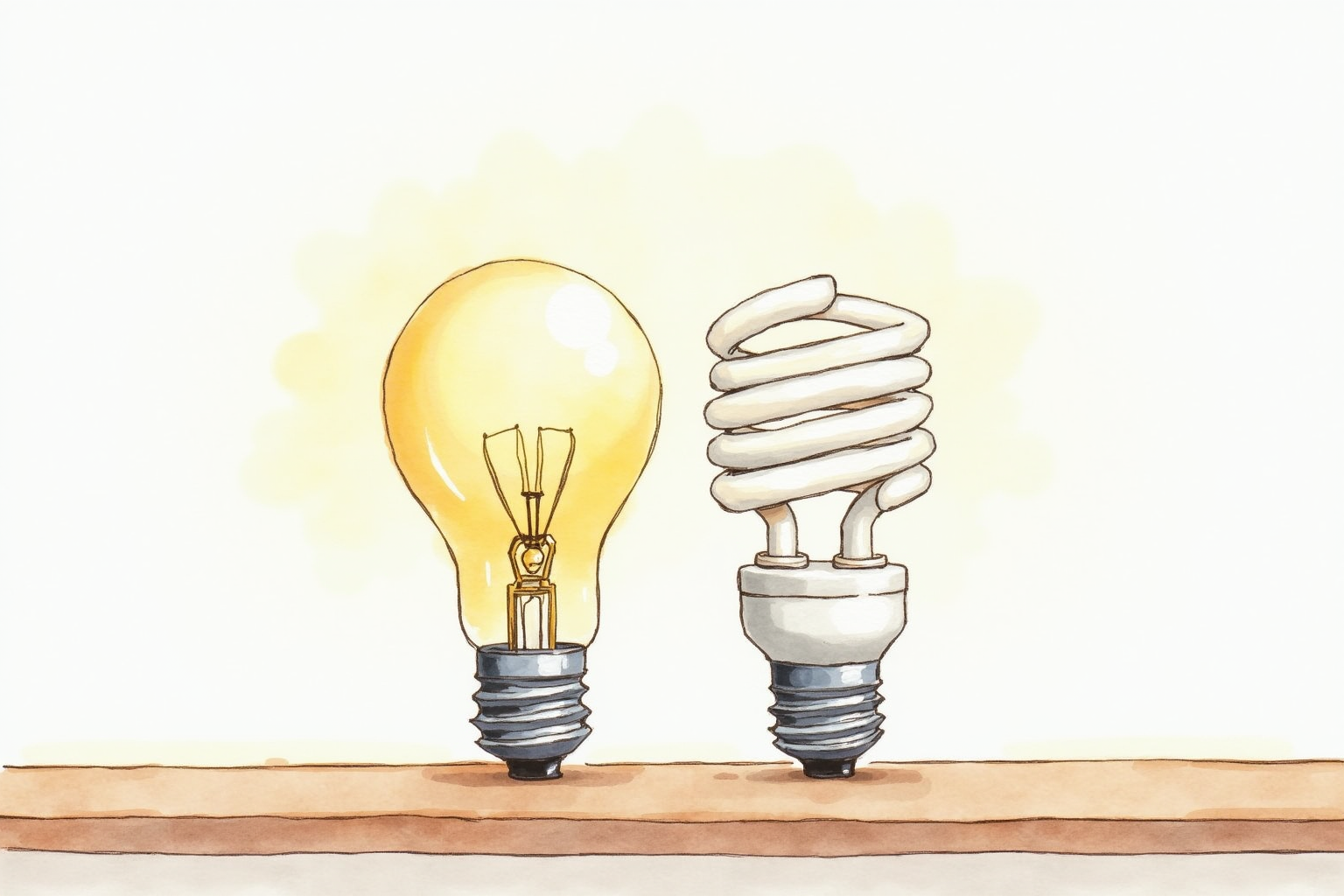
The relative energy use per equivalent brightness (800 lumens, typical for general lighting) is dramatic. Incandescent 60W uses 60W and lasts 1,000 hours. Halogen incandescent 43W lasts 1,500-3,000 hours. CFL 13W lasts 6,000-10,000 hours. LED 8-9W lasts 25,000-50,000 hours. Premium LED 7-8W with CRI 90+ lasts 25,000-50,000 hours.
The lifespan multiplier is the underrated factor. Replacing a 60W incandescent with a 9W LED saves about 51W of electricity per hour of use. At 3 hours per day for 365 days, that’s 56 kWh/year saved per bulb. At U.S. average $0.15/kWh, that’s $8.40/year saved per bulb. For an average home with 40 bulb sockets converting from incandescent, annual savings are $300-350.
LED basics

Modern LED bulbs are solid-state — light emitted from semiconductor diodes rather than heated filament or excited gas. The technology is mature and commoditized. Per Wirecutter and Consumer Reports testing, mainstream brand LEDs from Philips, GE, Cree, and ENERGY STAR-certified generics deliver consistent performance.
Philips ENERGY STAR LED — A19 60W Equivalent — 8 Pack
Price · $15-22
+ Pros
- · 8.5W replacing 60W incandescent
- · 25,000-hour rated lifespan
- · CRI 80+ — natural color rendering
- · Dimmer compatible — most popular dimmers
− Cons
- · Standard CRI not ideal for art/cosmetics
- · First-year defect rate ~2%
Paid affiliate link. Price, availability, and ratings can change; verify details on the retailer page before buying.
The Philips ENERGY STAR line represents the mainstream LED proposition: significant energy savings, reliable lifespan, broad fixture compatibility, and a price point ($2-3 per bulb in 8-packs) that pays back within months. For most household sockets, this is the right purchase.
High-CRI premium LEDs
For kitchens, bathrooms, art display, and color-critical work, premium LEDs with CRI 90+ deliver noticeably better color rendering. The premium is $3-8 per bulb vs $2-3 for standard, but worth it for kitchens (food appearance), bathrooms (skin tones), and any room where color matters.
CFL — phasing out
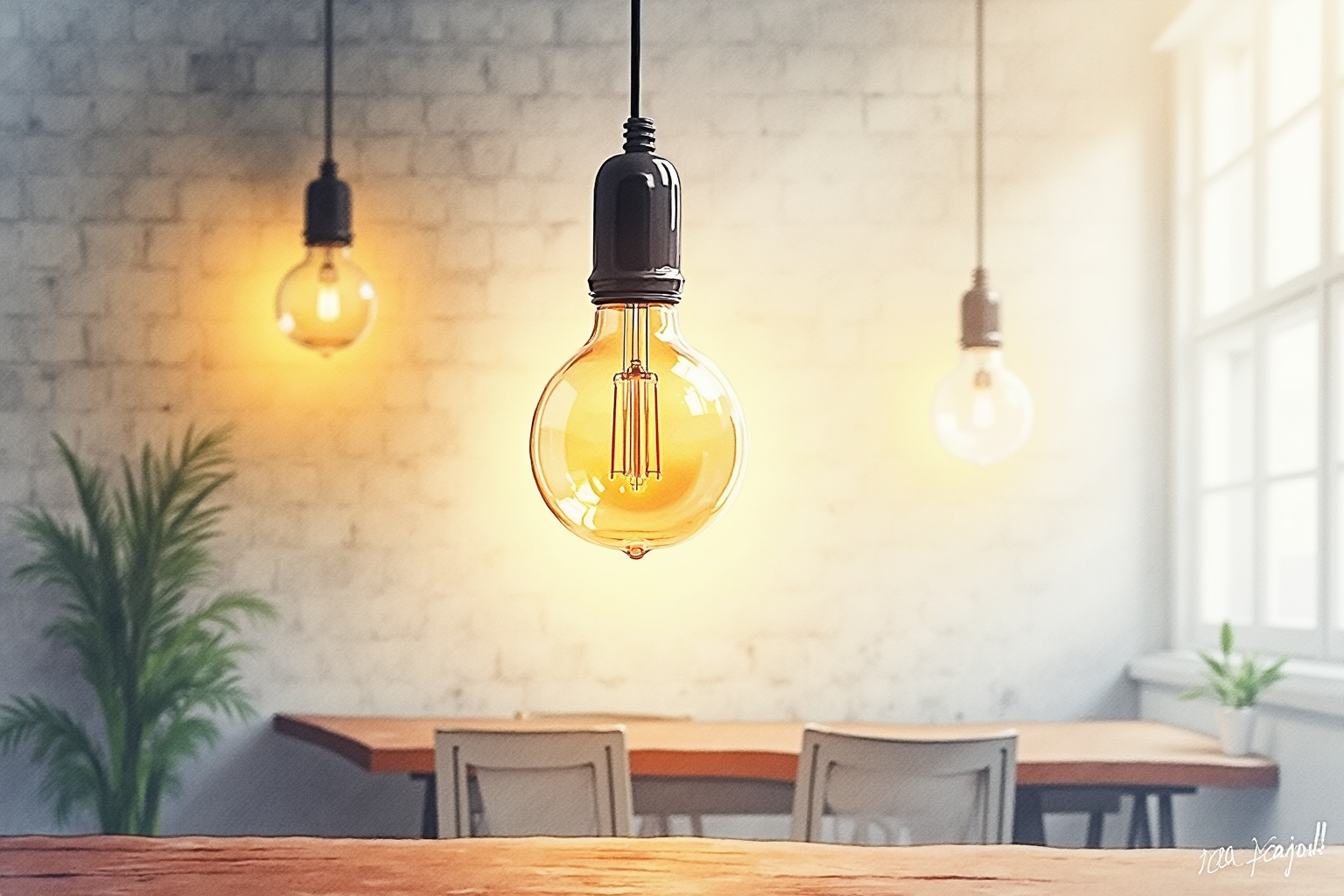
CFL bulbs (compact fluorescent) were the previous generation efficient lighting. They used 13-15W to deliver 60W-equivalent brightness, lasted 6,000-10,000 hours, and dominated 2008-2018 residential lighting.
CFLs have multiple downsides that LED solved. Mercury content (3-5mg per bulb) requires proper disposal — most municipalities have separate hazmat collection for CFLs, and bulb breakage exposes mercury vapor. CFLs need 2-3 minutes to reach full brightness from cold start. Color quality is generally poor (CRI 80 typical, 70-75 for cheap brands) with characteristic “fluorescent” greenish or blue tint. Frequent on/off cycles dramatically shorten CFL life — bathrooms and closets killed CFL bulbs within 12-18 months in field use.
If you still have CFLs in fixtures, replacing them with LEDs makes sense at end of CFL life or immediately for high-cycle fixtures (bathrooms, hallways, closets). Don’t dispose of working CFLs prematurely — they’re paid for and the marginal LED savings don’t justify replacement.
Incandescent and halogen
Mostly phased out per federal regulations (effective August 2023). Sales of inefficient general-service incandescent bulbs ended for most types. Remaining incandescent installations should be replaced with LED at end of life or sooner — incandescent bulbs cost about 8x more per year to operate than LEDs.
A few specialty applications still use incandescent or halogen: oven lights (high heat tolerance needed), some appliance lights, some decorative chandeliers with proprietary sockets. For these, LED equivalents exist in most cases.
Smart LEDs
WiFi or Bluetooth-connected LEDs add app control, scheduling, color changing, and integration with Alexa/Google/Apple Home.
Philips Hue White and Color Ambiance Starter Kit — 4 Bulbs + Bridge
Price · $180-200
+ Pros
- · 16 million colors + 50,000 white shades
- · Zigbee mesh — robust connectivity
- · Bridge enables 50+ bulb network
- · Best-in-class color quality and dimming
− Cons
- · High upfront cost
- · Bridge required for some features
- · App-dependent setup
Paid affiliate link. Price, availability, and ratings can change; verify details on the retailer page before buying.
Smart LED value depends on use case. For 4-6 strategic locations (bedroom for sleep schedule, kitchen for task lighting modes, accent lighting), the premium is worth it. For 30+ standard sockets, smart bulbs aren’t a good investment — too expensive and the features add little vs basic LEDs.
A practical hybrid: smart LEDs in bedrooms (sleep), living room accent (entertainment), kitchen island (task), and entry (security/welcome). Basic LEDs everywhere else.
LED filament bulbs
Decorative LEDs designed to look like vintage edison incandescent bulbs.
Bulbrite LED Filament Vintage Edison Bulb — A19 — 4 Pack
Price · $25-32
+ Pros
- · Visible filament look
- · Warm 2700K color temperature
- · LED efficiency (7W = 60W equiv)
- · Dimmable with most dimmers
− Cons
- · Higher price than basic LED
- · Some flicker in cheap brands
- · Filament design reduces total lumens
Paid affiliate link. Price, availability, and ratings can change; verify details on the retailer page before buying.
For exposed-bulb fixtures (pendants, chandeliers, sconces) where you see the bulb itself, LED filament is the right choice. They deliver the visible-filament aesthetic of edison incandescent at full LED efficiency.
Dimmer compatibility
LED dimming has improved significantly but isn’t universal. Per Lutron and DOE testing, modern LED bulbs work with about 80% of dimmers but check compatibility lists.
The common failure modes include flickering at low brightness (especially with older incandescent-rated dimmers), buzzing or humming with cheap LEDs, and inability to dim below 20-30% brightness. Solutions: use LED-rated dimmers (Lutron Caseta, Leviton Decora Smart), buy LED bulbs marked “fully dimmable,” and test with one bulb before whole-room conversion.
The full-house conversion math
For a household still running mostly incandescent (uncommon in 2024 but possible in older homes or rental units), converting all bulbs to LED is a clear win.
40 sockets multiplied by $3 average LED bulb cost equals $120 upfront. Annual energy savings at average use are $300-350. Payback period is 4-6 months. Lifetime savings over 8-10 years before replacement reach $2,400-3,500.
For a household already on CFL, the conversion math is less compelling but still positive. Energy savings drop to about $40-80/year for full conversion, plus the convenience and color benefits.
Bottom line
Standard 800-lumen LED bulbs from ENERGY STAR-certified brands (Philips, GE, Cree, Sylvania) are the right primary purchase for most household sockets. Buy in 8-pack or 16-pack for $2-3 per bulb. Use CRI 90+ premium LEDs for kitchens, bathrooms, and color-critical spaces.
Smart LEDs make sense in 4-6 strategic locations, not whole-house. LED filament bulbs are worth the premium for exposed-fixture decorative applications. Replace remaining CFLs at end of life rather than premature — the modest LED savings don’t justify discarding working bulbs.
For complementary reading, see heat pump vs gas heater, energy star appliances ROI, and the energy efficiency category.