Do Solar Panels Need Cleaning? Soiling Loss, Cost, and Safety Guide
A decision guide for rooftop-solar cleaning using production data, rainfall, soiling patterns, warranty rules, contractor cost, and fall safety.
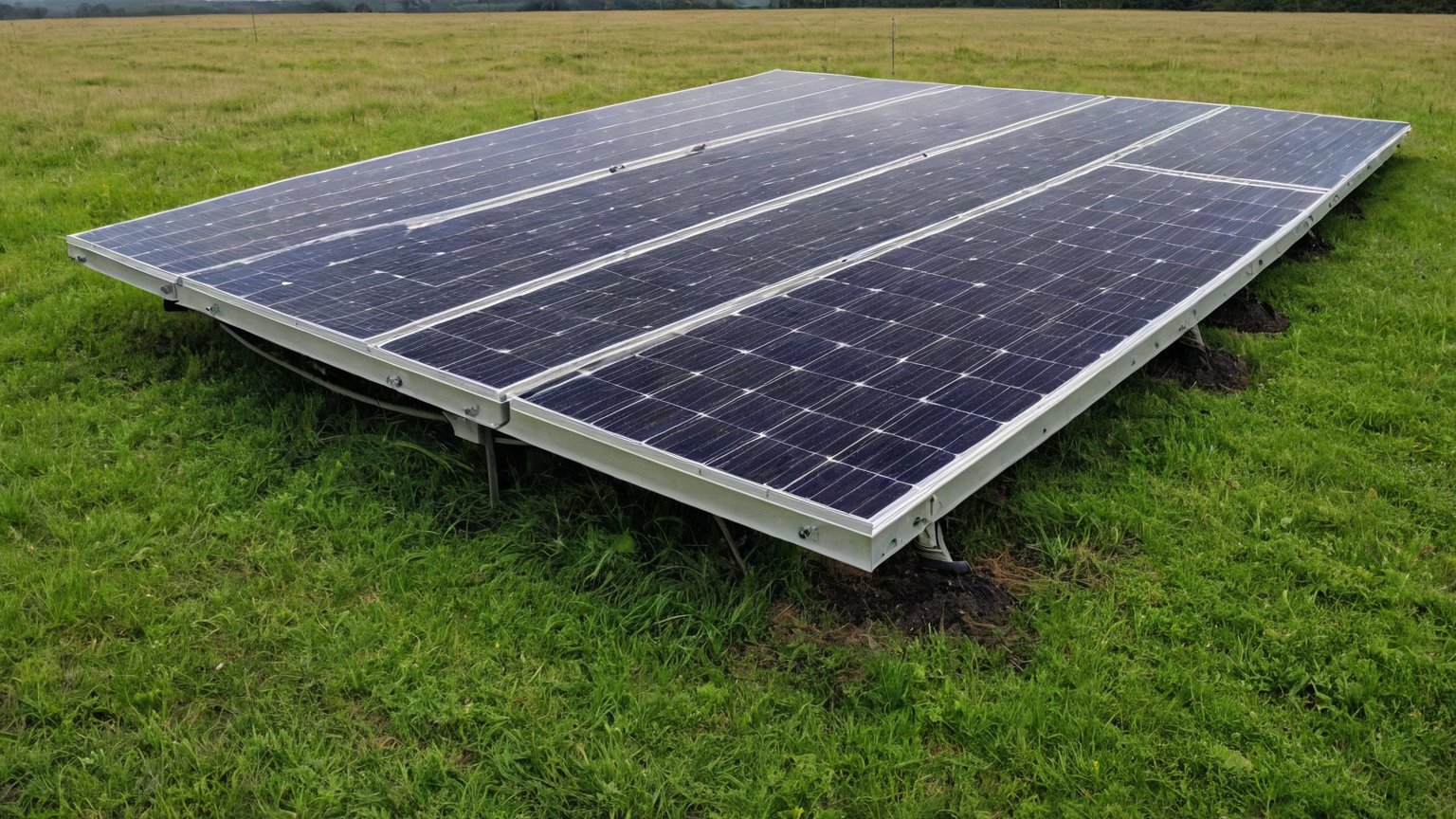
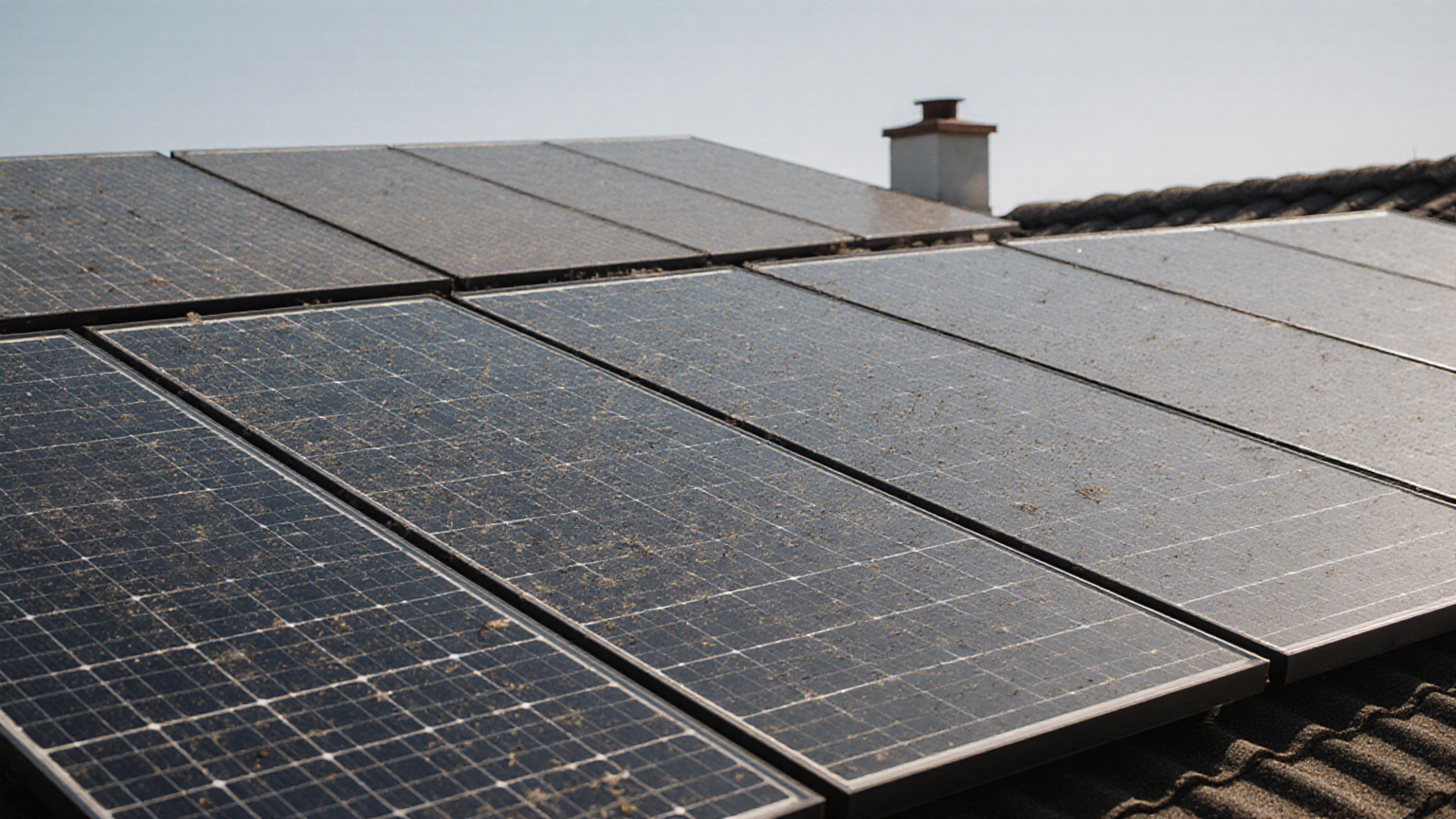
A dusty panel is not automatically a cleaning emergency. Some arrays lose noticeable production from pollen, ash, bird droppings, agricultural dust, or long dry periods. Others receive enough effective rain that paid washing would recover little energy. The right question is not “Are the panels dirty?” It is “Is removable soiling causing a measurable loss large enough to justify a safe, warranty-compliant cleaning?”
Rooftop solar is electrical equipment installed in a fall-hazard environment. Do not climb onto a roof merely to test a savings theory. Start with data, ground-level observation, the system manual, installer guidance, and a cost calculation.
Separate soiling from every other production change
Solar output changes with sunlight, temperature, shading, snow, inverter behavior, outages, clipping, degradation, grid interruptions, and monitoring errors. A lower month than last year does not prove dirt. First check:
- whether the monitoring system is reporting complete data;
- weather and irradiance differences;
- new tree, antenna, chimney, or construction shade;
- inverter or optimizer alerts;
- utility outages or export limits;
- snow cover or storm debris;
- whether all strings or modules declined together.
DOE’s system-design overview explains that array orientation, tilt, shading, and system components all affect production (DOE). DOE’s solar-radiation basics explains why irradiance varies with location, time, weather, and surface orientation; those inputs matter before diagnosing dirt from a production chart.
What counts as soiling?
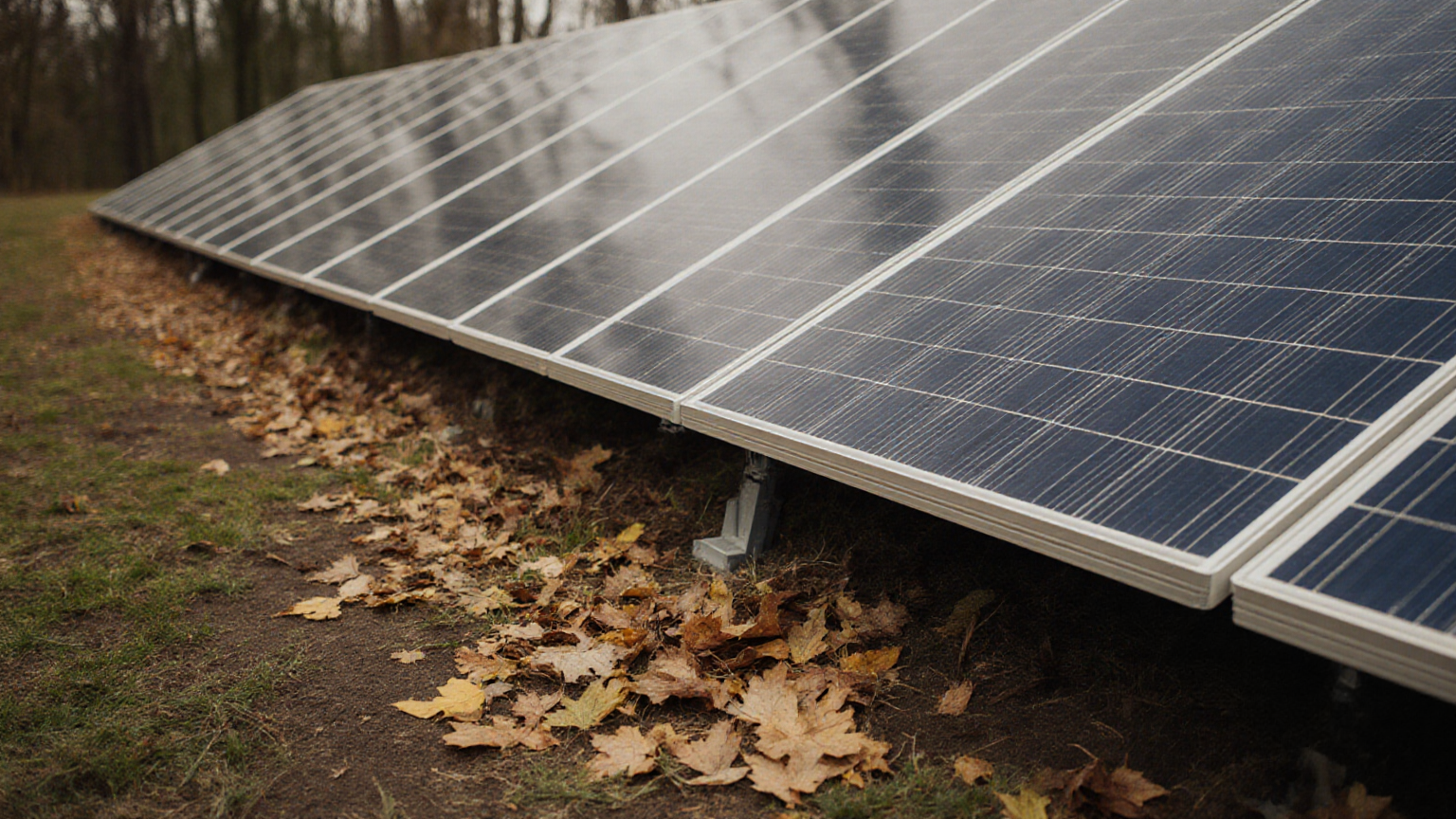
Soiling is material deposited on the module surface that blocks or scatters light. Common examples include fine dust, pollen, bird droppings, wildfire ash, salt spray, leaves, and pollution residue. The distribution matters. A thin uniform layer may cause a modest broad loss; a concentrated deposit across part of a cell can create disproportionate mismatch or hot-spot concerns depending on module design.
IEA PVPS reviews how climate, rainfall, particle type, tilt, cleaning, and site conditions affect soiling loss (IEA PVPS). Utility-scale evidence helps explain mechanisms but does not provide a universal residential cleaning interval. A low-tilt array beside an unpaved road has a different exposure from a steep roof in a rainy neighborhood.
Use a three-evidence cleaning trigger
Consider cleaning only when three kinds of evidence line up:
- Visible evidence: persistent deposit observed safely from the ground, a window, a drone operated legally, or service photos.
- Performance evidence: a repeatable shortfall after accounting for weather, season, temperature, shading, and monitoring gaps.
- Economic evidence: likely recovered energy value exceeds safe cleaning cost, water, risk, and potential damage.
One clue alone is weak. Visible dust may have little measurable effect. A production drop may be inverter trouble. A cleaning quote may never pay back. For system ownership, billing, and installer questions, DOE’s Homeowner’s Guide to Going Solar provides a broader contract and maintenance framework.
Build a weather-normalized comparison
Use matched periods rather than comparing a sunny week after cleaning with a cloudy week before it. A practical homeowner method:
- choose at least two clear days with similar season and temperature;
- compare daily kWh before and after a naturally cleaning rain or professional wash;
- check that no outage, shade change, or system alert occurred;
- repeat the observation rather than trusting one day;
- use installer or monitoring-platform normalization when available.
For a stronger baseline, use the installer or monitoring platform’s weather-normalized benchmark with the correct system size, tilt, azimuth, and known outage history. Do not tune assumptions until a preferred explanation appears. DOE’s solar-integration overview explains why generation, storage, loads, and grid interaction must be interpreted as one system rather than as an isolated panel surface.
Calculate the maximum plausible cleaning value
Assume, hypothetically:
- annual array production: 8,000 kWh;
- avoided electricity value: $0.18/kWh;
- estimated removable soiling loss: 3%;
- one cleaning restores that entire 3% for the whole year.
The optimistic recovered energy is:
8,000 × 0.03 = 240 kWh.
The optimistic annual bill value is:
240 × $0.18 = $43.20.
If a professional cleaning costs $180, the simple energy-only payback is more than four years, yet the benefit may last only until the next soiling event. Under those assumptions, cleaning for energy savings alone does not pencil out. If the deposit is localized bird waste with inspection or warranty implications, the decision may differ.
Do not count the same benefit twice. A production guarantee, solar renewable credit, time-of-use rate, export rate, or battery may change the value per recovered kWh. Use the marginal value of when and how energy is used or exported—not an average bill divided by kWh.
Scenario table
| Condition | First action | Cleaning decision |
|---|---|---|
| Light dust, normal production, rain expected | Monitor through the rain event | Usually wait |
| Long dry season, visible uniform dust, measurable normalized loss | Request installer-safe method and quote | Calculate recovered kWh value |
| Bird droppings or leaf pile on a small area | Document from a safe location and contact installer | Targeted professional service may be justified |
| Sudden large production drop | Check alerts, inverter, outage, and shade | Treat as a fault until proven soiling |
| Wildfire ash | Follow local air-quality and equipment guidance; avoid spreading ash | Professional assessment, especially on roof |
| Snow or ice | Do not climb or use unsafe tools | Wait for safe natural shedding or qualified service |
Rain helps, but “self-cleaning” is not absolute
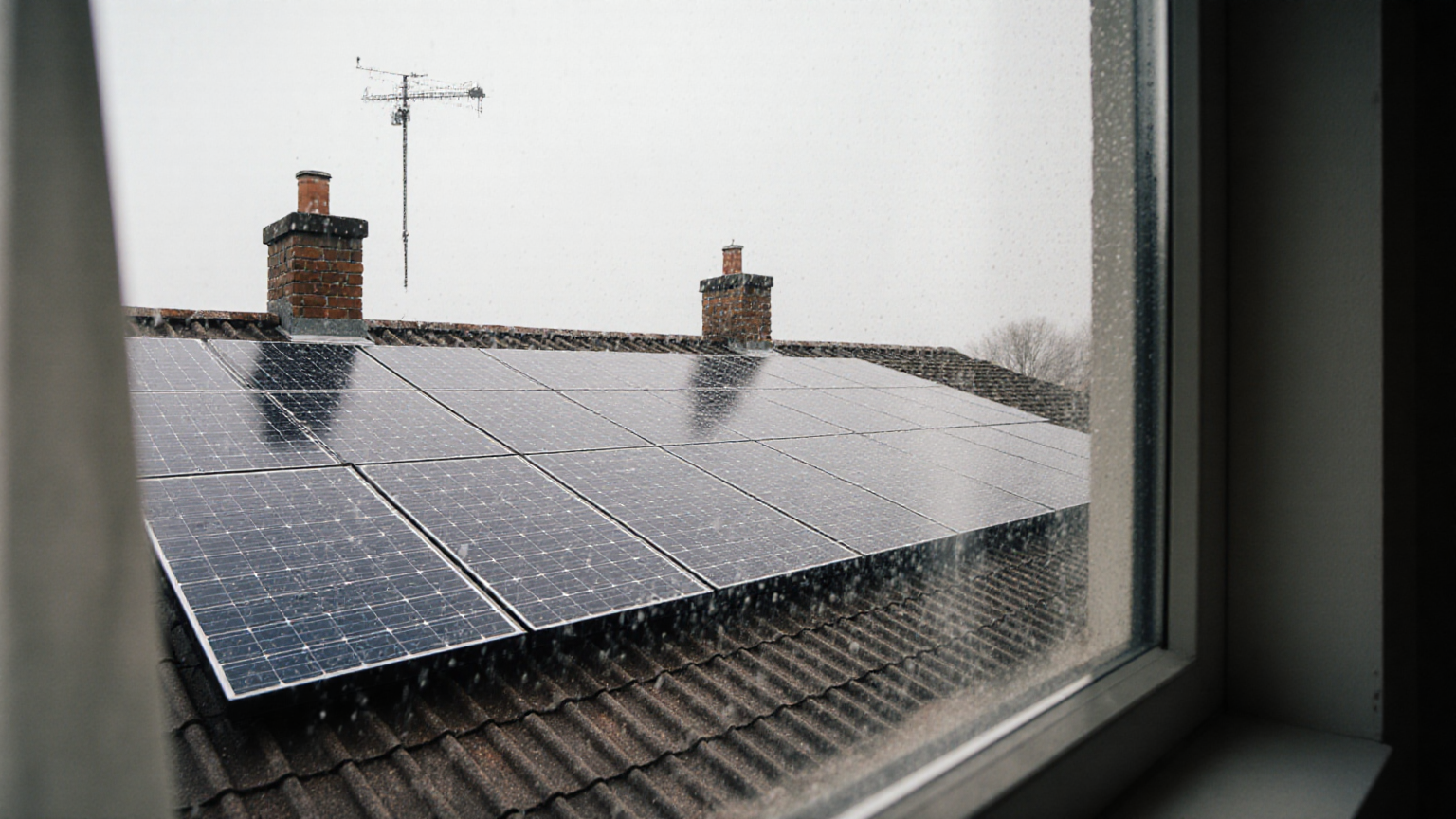
Rain can remove loose dust, especially on adequately tilted modules. It may not remove oily residue, baked pollen, heavy bird droppings, ash, or material trapped at a lower frame edge. Very light rain can combine with dust and leave spotting. Wind direction and roof geometry also matter.
Use a rain event as a free diagnostic: record production before, allow the modules to dry, then compare matched clear conditions. If performance does not change, soiling may not be the cause—or the rain may not have removed it. Experimental work on dew-driven particle removal further shows that local moisture and surface conditions can change soiling behavior; it is mechanism evidence, not a residential cleaning schedule (Scientific Reports).
The safety case against DIY rooftop washing
Falls are a much larger consequence than a small energy loss. Roof pitch, wet surfaces, brittle roofing, skylights, edge exposure, overhead lines, hoses, and carrying tools multiply risk. OSHA’s ladder-safety guidance addresses setup, angle, access, and use hazards (OSHA); OSHA’s broader fall-protection resources reinforce that roof work needs planned controls rather than improvised access. These resources do not turn an untrained homeowner into a qualified rooftop worker.
Solar modules can remain electrically active in light. Disconnects do not necessarily remove voltage from every conductor. Cracked glass, damaged wiring, connectors, junction boxes, and wet electrical components require qualified assessment. For most rooftop arrays, use the installer, manufacturer-approved service provider, or a qualified solar O&M contractor.
Protect the module and warranty
Before any cleaning, obtain the exact module model, installer instructions, roofing warranty, and system-owner or lease terms. Avoid assuming these methods are safe:
- pressure washers;
- abrasive brushes or pads;
- harsh detergents, solvents, or mineral-removal acids;
- very cold water on hot glass;
- walking, kneeling, or placing tools on modules;
- spraying connectors, junction boxes, vents, or damaged components;
- scraping snow or hardened deposits with metal tools.
Peer-reviewed work on waterless cleaning systems illustrates that cleaning effectiveness depends on engineered contact, particle conditions, and equipment design (Solar Energy). It is not a DIY rooftop instruction; manufacturer and installer requirements should control the actual equipment.
Water quality matters because hard water can leave mineral spots. Timing matters because hot modules can experience thermal stress. Drainage matters because runoff can stain roofs, overload gutters, or carry residue into gardens and rain barrels. The rainwater-collection guide explains why rooftop runoff should not be treated as automatically clean.
What a professional quote should include
Ask the contractor to specify:
- roof-access and fall-protection method;
- proof of appropriate insurance and qualifications;
- module-compatible water and tools;
- whether electrical inspection is included;
- before-and-after photos;
- damaged-module or loose-wiring stop procedure;
- water containment and runoff plan;
- total cost, not a teaser price;
- how the work preserves manufacturer and installer requirements.
A cleaner should not promise a fixed output increase without a baseline. If the array has a fault, washing may delay the real repair.
Keep a maintenance log
Record date, reason, visible condition, weather, daily kWh, alerts, service provider, method, photos, cost, and matched post-service production. After two or three events, the system’s own history can reveal whether a seasonal cleaning interval is worthwhile.
Combine the log with the home energy audit checklist so solar maintenance does not distract from larger, cheaper efficiency opportunities. If incentives are part of a new system decision, use the date-specific 2026 home-energy rebates and credits guide and verify live rules rather than assuming old federal credits still apply.
Go/no-go checklist
Proceed with qualified cleaning only when the deposit is real and persistent, performance evidence supports a removable loss, manuals allow the method, the roof and electrical system can be serviced safely, and the benefit or inspection need justifies the cost. Hold when the loss is unmeasured, rain is likely to resolve loose dust, the quote relies on a guaranteed percentage, warranty guidance is missing, or DIY roof access is the only plan.
FAQ
How often should panels be cleaned?
There is no responsible universal interval. Use site exposure, rainfall, tilt, production data, installer guidance, and maintenance history.
Can I spray panels from the ground?
Do not assume it is safe or effective. Overspray can reach electrical components, hard water can spot glass, and pressure or thermal shock can violate guidance. Ask the manufacturer or installer.
Are dirty panels a fire hazard?
Ordinary dust is mainly a performance concern, but concentrated deposits, damaged modules, loose connectors, arcing, or hot spots require qualified inspection. A sudden fault should not be diagnosed as dirt.
Is professional cleaning always worth it?
No. Calculate the maximum recoverable kWh value and compare it with the quote. Inspection, warranty, or localized-deposit reasons may justify service even when energy payback alone does not.