Rainwater Collection Setup — EPA Guidelines, Barrel Sizing, and Real Output
Rain barrel and rainwater harvesting systems: EPA guidance, sizing math, downspout connections, and how much water you can realistically collect.
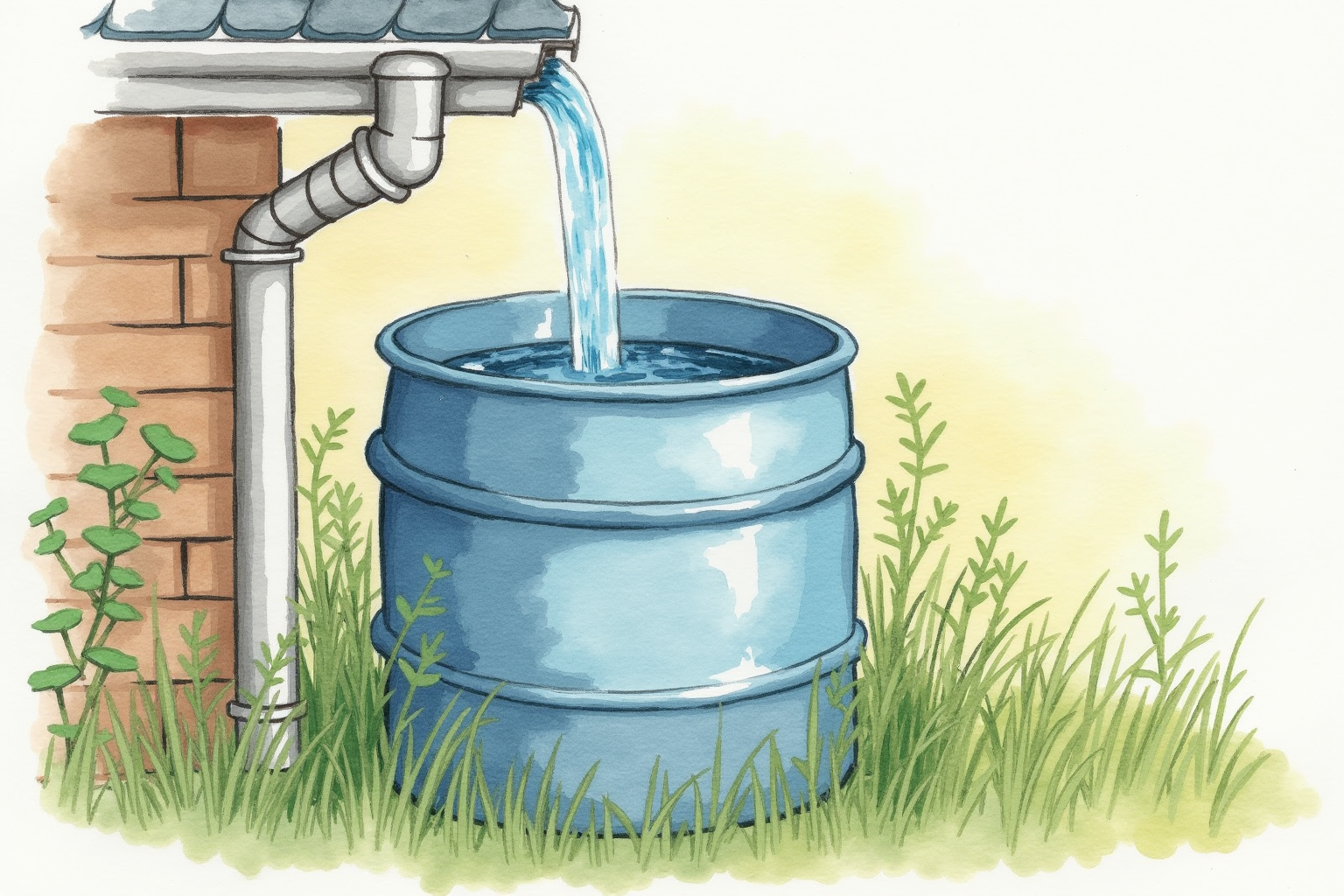
Rainwater harvesting is one of the most direct sustainability practices available — capture water that’s already falling on your roof, store it, and use it for landscape irrigation instead of treated municipal water. Per Texas A&M Rainwater Harvesting research, a typical residential roof captures 0.6 gallons per square foot per inch of rainfall, making rain barrel and cistern systems practical complements to drought-tolerant landscaping.
This article uses EPA rainwater harvesting guidance, Texas A&M Extension calculations, ARCSA (American Rainwater Catchment Systems Association) standards, and NOAA precipitation data to evaluate rain barrel and harvesting setups. Topics include barrel sizing, downspout connections, first-flush diverters, multi-barrel systems, and how much water you can realistically collect.
For complementary content, see drought-tolerant plants data and low-flow showerhead tested.
The math
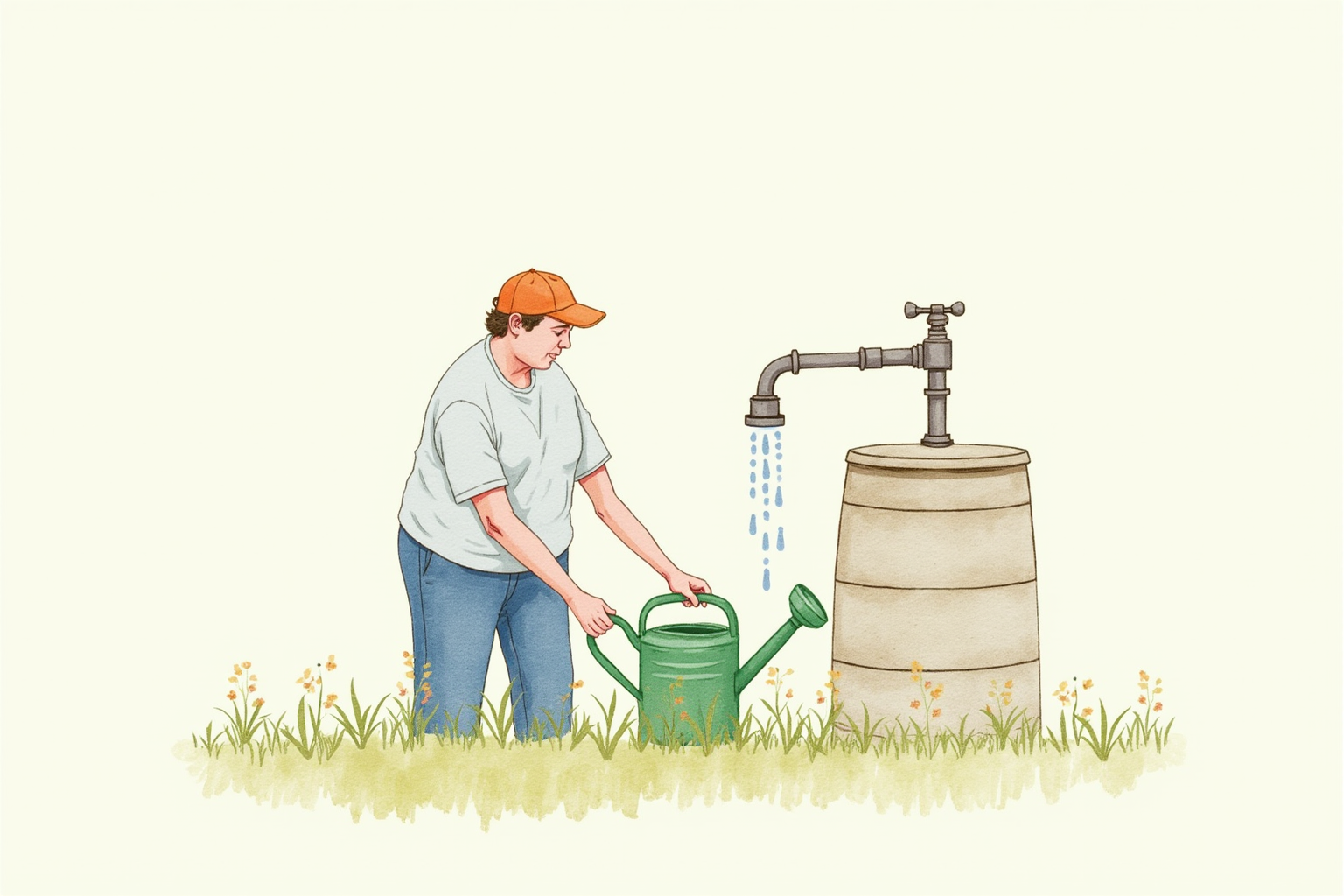
Per Texas A&M Rainwater Harvesting calculation: roof_area_sqft × inches_of_rain × 0.62 = gallons collected at 100% efficiency. Real efficiency is 70-85% (some lost to first flush, splash, evaporation). For practical estimation:
1,000 sq ft roof × 1 inch rain × 0.62 efficiency factor ≈ 500-600 gallons.
In a moderate U.S. climate with 35-40 inches annual rainfall, that’s 17,000-21,000 gallons per year potentially captured from a 1,000 sq ft roof. The limiting factor for most households is storage — typical rain barrel systems store 50-200 gallons, requiring continuous emptying via garden use to avoid overflow.
Regional rainfall
Per NOAA precipitation data, U.S. annual rainfall varies enormously by region. Pacific Northwest receives 60-100 inches in coastal areas. Eastern U.S. averages 35-50 inches. Plains states average 20-35 inches. Southwest deserts receive under 15 inches.
For arid regions (Phoenix, Las Vegas, Salt Lake), rainwater harvesting captures less total volume but per-gallon value is higher due to expensive water rates and drought conditions. For wet regions, harvesting offsets summer dry periods between storms.
Basic rain barrel setup
The starting point. A single 50-100 gallon barrel connects to a downspout via diverter, captures runoff, and delivers via spigot.
FCMP Outdoor RC4000 Rain Barrel — 50 Gallon
Price · $100-130
+ Pros
- · 50 gallon capacity from durable polyethylene
- · Flat-back design fits against house
- · Top mesh screen blocks debris and mosquitoes
- · Linkable to additional barrels
− Cons
- · Capacity limited for heavy garden use
- · Requires elevated foundation for hose pressure
- · Plastic appearance — not the prettiest
Paid affiliate link. Price, availability, and ratings can change; verify details on the retailer page before buying.
The FCMP RC4000 is a practical mainstream choice — flat-back fits against house siding, top mesh keeps out leaves and mosquitoes, link kit enables multiple barrels. Setup requires raising the barrel 6-12 inches on cinder blocks or stand to create sufficient hose pressure.
Installation requirements
A rain barrel installation needs: foundation level and stable (50 gal of water weighs 400 lbs), downspout diverter (kit $15-25) or cut downspout with debris filter, overflow drain routed away from foundation, hose connection or filling spout, screened opening to block mosquitoes and debris.
Total DIY install time: 1-2 hours. Required tools: hacksaw, drill with hole saw, basic hand tools.
First-flush diverter
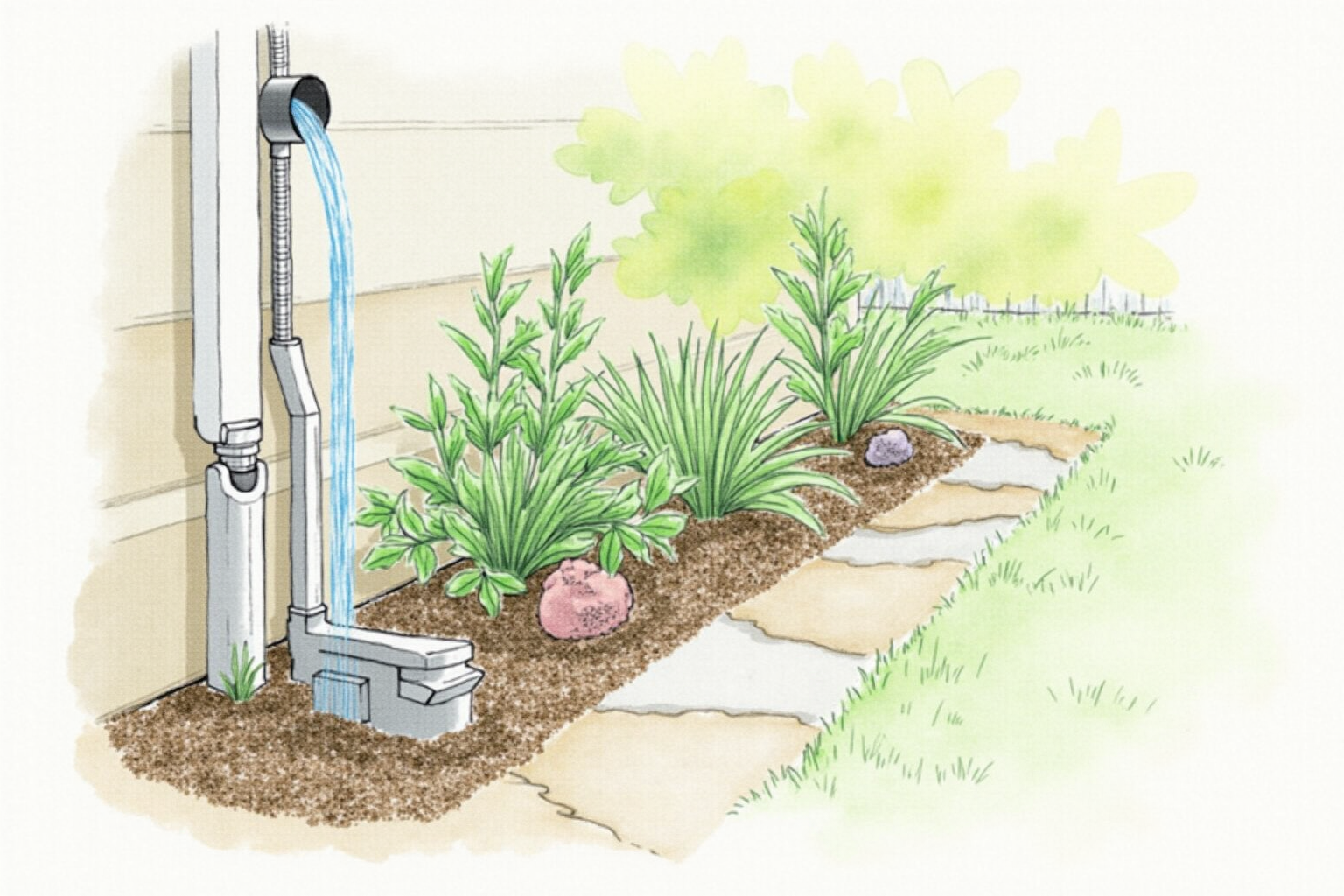
The recommended upgrade. First-flush diverters capture and dispose of the first 1-2 gallons of runoff from each rain event — this water contains the highest concentration of roof dust, bird droppings, leaves, and pollen.
EarthMinded Diverter Kit with First Flush
Price · $45-65
+ Pros
- · Captures dirtiest first-flush water
- · Automatic operation — no manual intervention
- · Fits standard 2x3 or 3x4 downspouts
- · Reduces sediment buildup in barrel
− Cons
- · Slightly reduces total capture
- · Periodic cleaning of flush chamber needed
Paid affiliate link. Price, availability, and ratings can change; verify details on the retailer page before buying.
First flush significantly improves water quality for vegetable garden use. Without it, the first water captured is debris-laden and stains tomatoes or leafy greens.
Multi-barrel systems
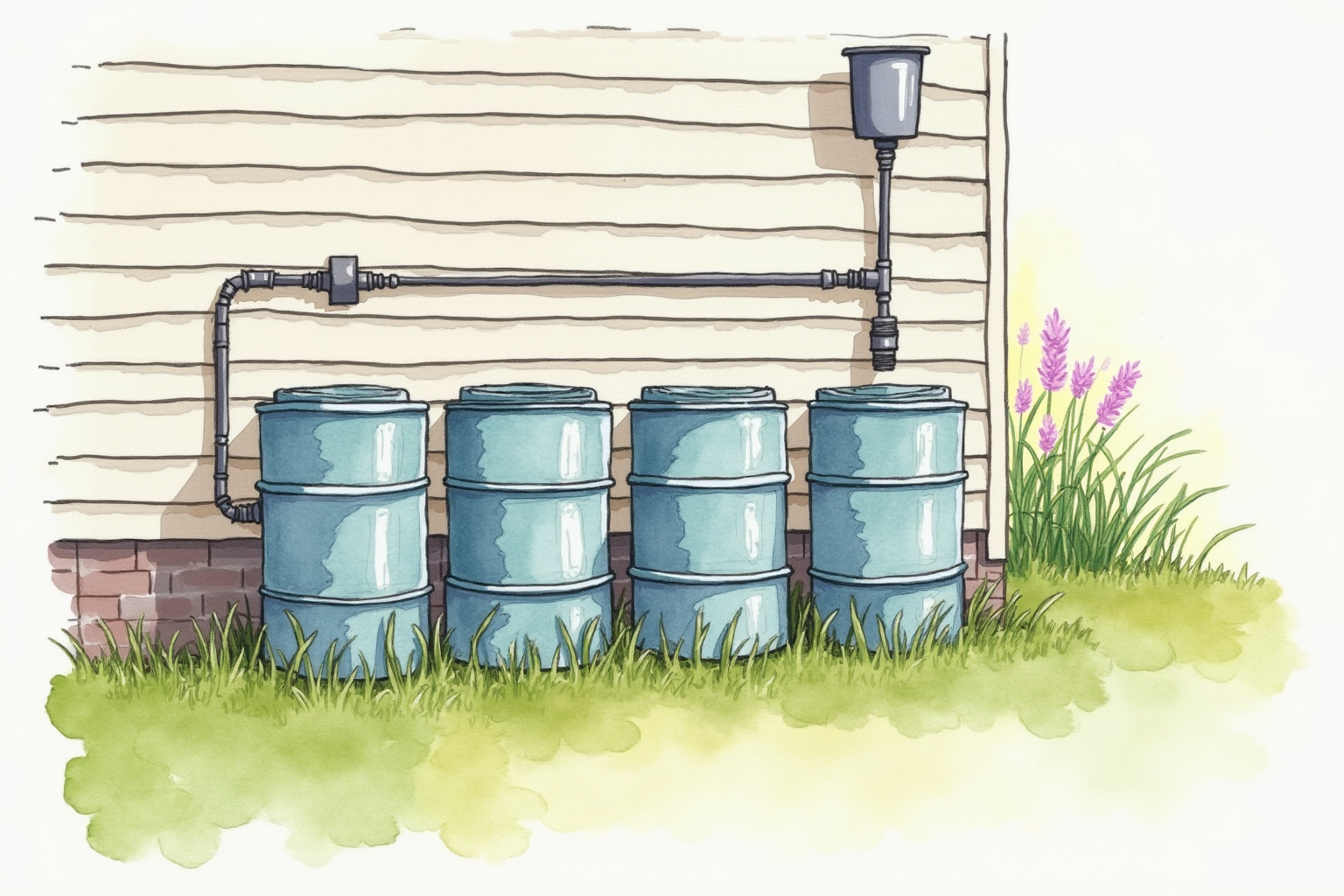
The next-step upgrade. Connecting 2-4 barrels in series multiplies capture capacity without dramatically increasing footprint or setup complexity.
A typical 3-barrel system holds 150-300 gallons total. The first barrel connects to downspout, overflows to barrel 2, overflows to barrel 3, with terminal overflow routed away from house foundation. All barrels share the spigot output through interconnections.
For households with significant garden watering needs (vegetable garden, container plants, flower beds), 150-300 gallons captures enough rainwater for 1-2 weeks of garden watering between rain events.
Cisterns
For serious harvesting. Cisterns are larger (500-10,000+ gallons), often underground or in basement, with first-flush diverters, sediment filters, and electric pumps. Cost runs $1,500-15,000 installed.
Cistern systems make sense for: arid climates (Arizona, New Mexico, parts of Texas, California) where every gallon counts, off-grid homes with no municipal water, households with substantial gardens (1/4 acre+ vegetable production), new construction where rough-in is cheap, and locations with utility rebates for harvesting systems (Tucson, Albuquerque, Austin offer $250-1,500 rebates).
Rain chains and alternative aesthetics
For visible front-of-house downspouts where standard barrels look industrial, rain chains and decorative rain bowls offer aesthetic alternatives.
Rain chains (Japanese tradition) replace downspouts with copper or steel chains that direct water visibly into landscape rain garden or barrel. Cost $50-200 depending on material and length.
Decorative rain barrels (oak whiskey barrel style, painted artisan versions) cost more ($150-400) but blend with garden aesthetic.
Maintenance
Per ARCSA standards, rain barrel systems require minimal but consistent maintenance: clean leaf screens monthly (or after every major storm), check for mosquito breeding (water should never be open to atmosphere for more than a few days), drain and rinse barrel annually before winter (in freezing climates), inspect connections and overflow paths during spring start-up, replace damaged hose connections and gaskets as needed.
In freezing climates, rain barrels must be drained and disconnected before first freeze — water expansion will crack plastic barrels.
Water quality considerations
Per EPA and Virginia Cooperative Extension guidance, rainwater quality depends on roof material and barrel conditions:
Safe for vegetable gardens with standard roof (composite asphalt shingle, metal, tile). Avoid roof runoff from cedar shake roofs treated with copper preservative — leaches copper. Avoid old (pre-1980) roofs with potential lead solder.
Test water if you have any concerns — basic test kits available at hardware stores ($15-30) check for bacterial contamination, pH, and common contaminants.
For ornamental landscape watering (lawn, flowers, shrubs), water quality concerns are minimal. For vegetable gardens, basic first-flush diversion is sufficient. For drinking water, you need full treatment systems (UV, filtration, chemical disinfection) and likely permits.
Mosquito prevention
Per ARCSA and EPA WaterSense guidance, mosquito breeding is the most common rain barrel problem. Prevention:
Fine mesh screen at every barrel opening (top, overflow, spigot). Mosquito dunks (Bti larvicide, $5-10) added to water — kills mosquito larvae but safe for plants and pets. Drain and refill if water sits stagnant more than 7-10 days. Maintain sealed system — gaps invite mosquitoes.
Bti dunks are highly effective and pet-safe, recommended by most extension services for rain barrel use.
Bottom line
A single 50-100 gallon rain barrel is the right starting point for most households — modest cost ($100-150), easy DIY installation, immediate water-saving impact during summer garden season. Add first-flush diverter ($45-65) for vegetable garden use. Multi-barrel systems (2-4 connected) are practical upgrades for serious gardeners.
Cisterns make sense for arid climates, off-grid homes, and substantial garden operations. For most households, rain barrels remain the right scale — enough to meaningfully supplement irrigation without the cost and permitting complexity of cistern installation.
Per EPA WaterSense data, even modest rainwater harvesting can offset 1,000-3,000 gallons of municipal water annually per household. Combined with drought-tolerant landscaping, total outdoor water savings of 50-75% are achievable.
For complementary reading, see drought-tolerant plants data, low-flow showerhead tested, and the water conservation category.