Space Heater vs Heat Pump: Cost, Comfort, and Safety Guide
Compare electric space heaters with heat pumps using a transparent kWh calculation, room-by-room decision table, circuit safety rules, and stop conditions.
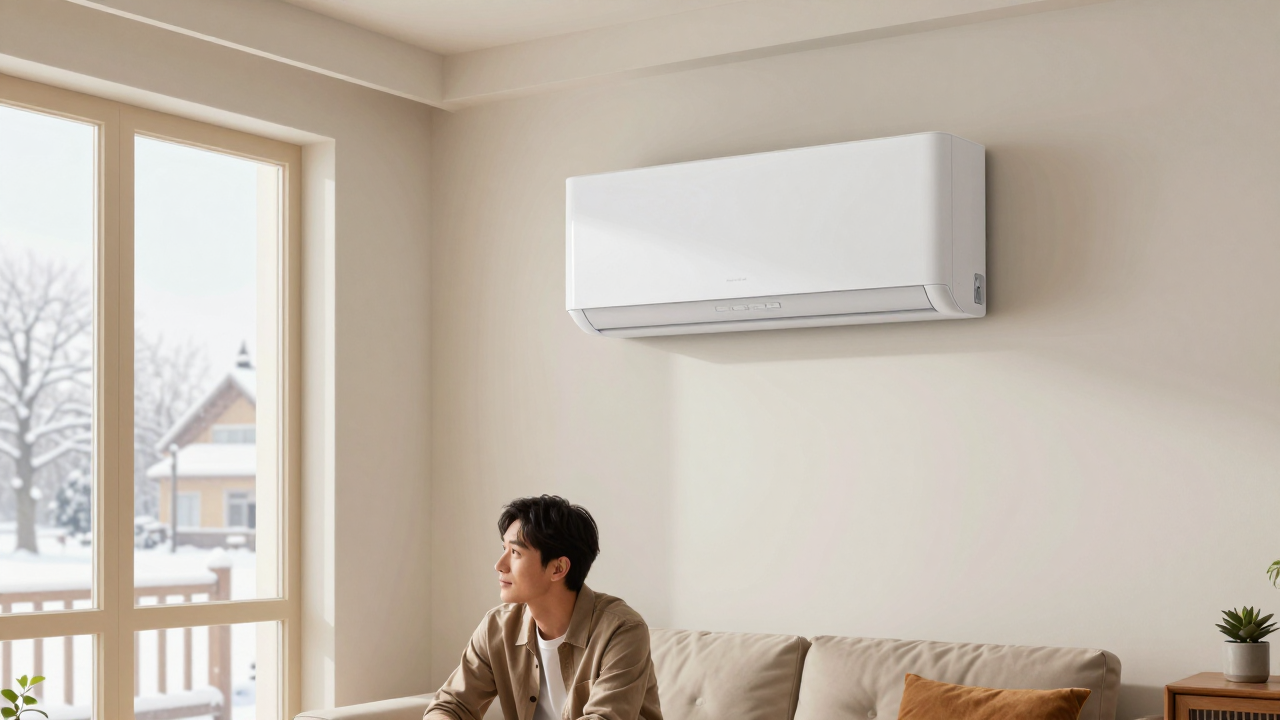
A portable electric heater is cheap to buy and easy to move. A heat pump costs far more to install but can move several units of heat indoors for each unit of electricity it consumes. That creates an apparent contradiction: the less efficient appliance can still be the lower-cost choice for a brief session in one small room, while the more efficient system usually wins when it must heat a larger area for many hours.
The decision is not “Which machine has the lower wattage?” It is “How much occupied space needs heat, for how long, at what electricity rate, with what safety and comfort constraints?” This guide builds that comparison without assuming a particular brand, climate, house, or utility tariff.
Start with the physics: making heat versus moving heat
An electric resistance heater converts electricity into heat at the point of use. A nominal 1,500-watt portable heater drawing full power uses 1.5 kilowatt-hours in one hour. At the appliance, resistance heat turns electrical input into room heat, but that does not mean “lowest bill.” ENERGY STAR recommends looking beyond the heating unit to equipment efficiency and whole-home improvements when planning comfort upgrades (ENERGY STAR heating and cooling guidance).
A heat pump does something different: it uses a refrigeration cycle to move heat from outside to inside. ENERGY STAR explains that air-source heat pumps transfer heat rather than create it and can provide efficient heating and cooling when properly selected and installed (ENERGY STAR air-source heat pumps). That ratio is the coefficient of performance, or COP. A COP of 3 means one kWh of electricity moves approximately three kWh-equivalent of heat under the stated conditions.
COP is not constant. Outdoor temperature, indoor set point, defrost cycles, equipment sizing, airflow, refrigerant charge, duct losses, installation quality, and compressor speed all change performance. Nameplate or laboratory efficiency is not a promise for every hour in a particular house.
The fair comparison is delivered heat
Comparing a 1,500-watt heater with a heat pump’s input wattage is misleading unless both deliver the same heat to the same zone. Use this relationship:
Electricity needed = required delivered heat ÷ effective COP
For resistance heat, use a site COP near 1 for a planning comparison. For a heat pump, use a conservative seasonal or temperature-specific COP from matched-system performance data—not an advertised best case. ENERGY STAR’s current cold-climate criteria require qualifying equipment to demonstrate a COP of at least 1.75 at 5°F and retain at least 70% of its 47°F heating capacity at 5°F under specified tests (ENERGY STAR criteria). That is a product qualification threshold, not a guarantee that every installation achieves COP 1.75 at every cold-hour condition.
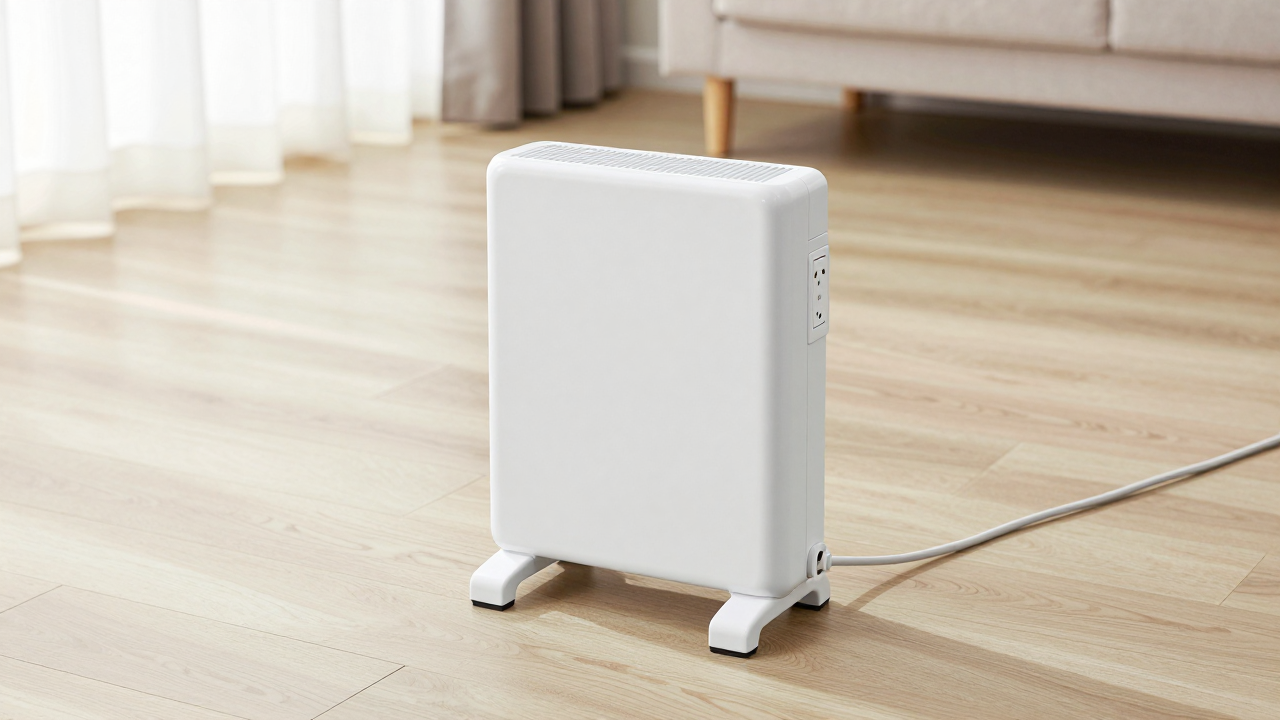
A transparent one-evening cost calculation
Assume a heater draws its full rated 1.5 kW for eight hours and electricity costs a hypothetical $0.18 per kWh:
Space-heater energy = 1.5 kW × 8 hours = 12 kWh
Space-heater cost = 12 kWh × $0.18/kWh = $2.16
If a heat pump delivered the same 12 kWh-equivalent of heat at an effective COP of 3:
Heat-pump electricity = 12 ÷ 3 = 4 kWh
Heat-pump cost = 4 kWh × $0.18/kWh = $0.72
The heat pump saves 8 kWh and $1.44 in this same-delivered-heat example. At COP 2, it would use 6 kWh and cost $1.08. But this does not prove that running a whole-house system is cheaper than warming one occupied office. If the heat pump must deliver 36 kWh-equivalent across several rooms while the portable unit delivers 12 to one room, the hypothetical costs are both $2.16 at COP 3. The portable heater did not become efficient; the service boundary changed.
Use the marginal rate on the bill, including time-of-use periods and variable riders where applicable. The EIA’s monthly table is a useful national and state context, but its averages are not a substitute for your tariff (EIA electricity prices). Do not include fixed monthly charges that would be paid either way.

Decision table: which tool fits the job?
| Situation | Better starting option | Why | Important limit |
|---|---|---|---|
| One occupied room for one or two supervised hours | Portable electric heater may be reasonable | Low purchase cost; avoids conditioning unused zones | Fire, tip-over, cord, outlet, child, and pet hazards |
| Several rooms for most of the day | Heat pump | Lower electricity per unit of delivered heat | Sizing, distribution, defrost, and installation matter |
| Regular overnight heating | Heat pump or permanent listed system | Designed for controlled long-duration service | Do not leave a portable heater running while sleeping |
| Very cold design conditions | Cold-climate heat pump plus a planned backup strategy | Verified low-temperature capacity can reduce resistance backup | Confirm capacity at local design temperature |
| Rental with no permission for permanent equipment | Efficiency fixes plus limited supervised portable heat | Avoids unauthorized alterations | Landlord, lease, circuit, and egress rules still apply |
| Room has a loose, hot, or discolored outlet | Neither until inspected | The electrical fault is a stop condition | Qualified electrician or property manager required |
| Pipes or distant rooms could freeze | Whole-building plan | A warm occupied room does not protect hidden plumbing | Monitor vulnerable zones; do not improvise unattended heaters |
This table is a decision aid, not an engineering load calculation. A room’s heat loss can exceed a portable heater’s output; a poorly located mini-split may not distribute heat through closed doors; and a central system may use resistance auxiliary heat during demanding conditions.
When a space heater can genuinely reduce total use
Zonal heating works only when you can safely lower heat delivery elsewhere without creating cold-room, moisture, pipe-freeze, or occupant-health problems. The strongest case has all of these features:
- one small occupied zone;
- a short, supervised schedule;
- doors can be closed without blocking required ventilation or egress;
- the main system can be set back without triggering inefficient recovery or resistance backup;
- no vulnerable plumbing or moisture problem sits in the cooler area;
- the heater has a sound direct wall connection and required clearance.
If the main system continues heating the whole house at the same set point, the portable heater is usually an added load rather than a substitute. Measure the whole-home meter or compare similar-weather days rather than assuming the central system “barely ran.” Our smart thermostat guide explains why aggressive setbacks and recovery can backfire for some heat-pump controls.
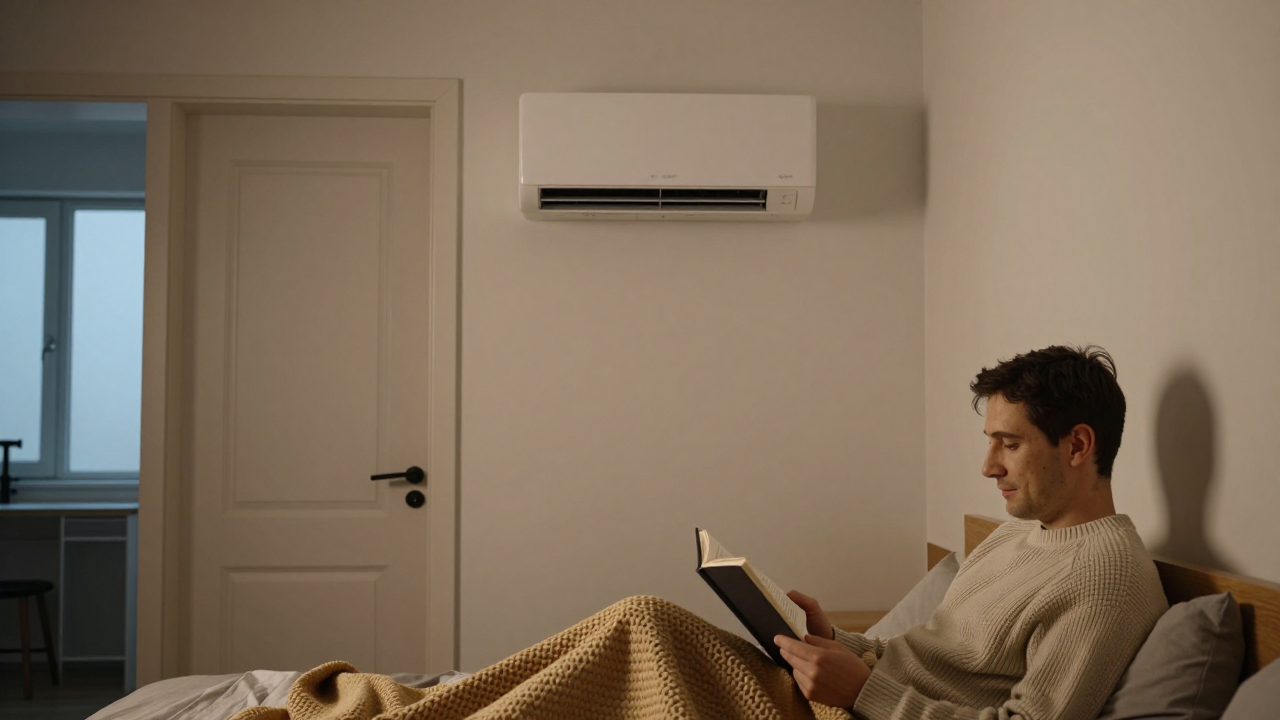
Space-heater safety is a hard gate, not a footnote
The Consumer Product Safety Commission says portable heaters should stay at least three feet from drapes, furniture, bedding, and other combustibles; electric models should plug directly into a wall outlet, never a power strip or extension cord; and heaters should be turned off while sleeping (CPSC winter-heating guidance). CPSC estimates portable heaters, including electric models, were involved in an average 1,600 fires, 70 deaths, and 150 injuries annually during 2020–2022.
NFPA’s newer 2020–2024 averages show why a small appliance deserves serious controls: space heaters and heating stoves accounted for 30% of home heating-equipment fires but 73% of deaths in those fires (NFPA home-heating safety). Different agencies, periods, and definitions should not be merged into one trend line; both support conservative placement and supervision.
Before every use:
- Put the unit on a hard, level, stable surface where it cannot block a doorway.
- Maintain the manufacturer’s clearance and at least the CPSC three-foot combustible buffer.
- Plug it directly into a sound wall outlet; do not use an extension cord, power strip, adapter, or multi-plug device.
- Keep the cord uncovered and out of traffic; never route it under rugs or furniture.
- Keep children and pets outside the safety zone.
- Turn the unit off and unplug it before leaving the room or going to sleep.
- Follow the exact model manual and recall notices.
Stop immediately if the plug or outlet is loose, unusually warm, discolored, buzzing, sparking, or scorched; if the cord is damaged; if the breaker trips; or if the heater was wet or tipped over. Do not move the heater to another circuit as a substitute for diagnosis. Contact a qualified electrician, landlord, or property manager.
Electric resistance heaters and electric heat pumps do not create carbon monoxide at the appliance because they do not burn fuel. That does not make every home CO-free: attached garages, fireplaces, fuel-fired furnaces, generators, and other combustion sources remain hazards. CDC calls CO odorless and colorless and recommends appropriate alarms and qualified servicing of fuel-burning appliances (CDC CO basics). Never use an oven, charcoal device, camp stove, or outdoor heater as substitute indoor heat.
Heat-pump limits that change the answer
A heat pump should be selected from matched indoor/outdoor performance data and sized with a room-by-room load calculation. Oversizing can impair comfort and cycling; undersizing can increase backup use or leave the house cold. Duct leakage and poor airflow can erase part of an equipment-efficiency advantage. Ductless systems avoid duct losses and allow zoning, but PNNL’s Building America guidance emphasizes correct sizing, head placement, controls, and installation details (PNNL ductless mini-split guidance).
Ask a contractor for:
- the design outdoor temperature used;
- heating load by room and for the whole home;
- rated capacity and COP at relevant low temperatures;
- when supplemental resistance heat is expected to operate;
- condensate, snow, drainage, and defrost provisions;
- head placement and door-closed distribution assumptions;
- electrical-panel and branch-circuit scope;
- commissioning measurements and warranty responsibilities.
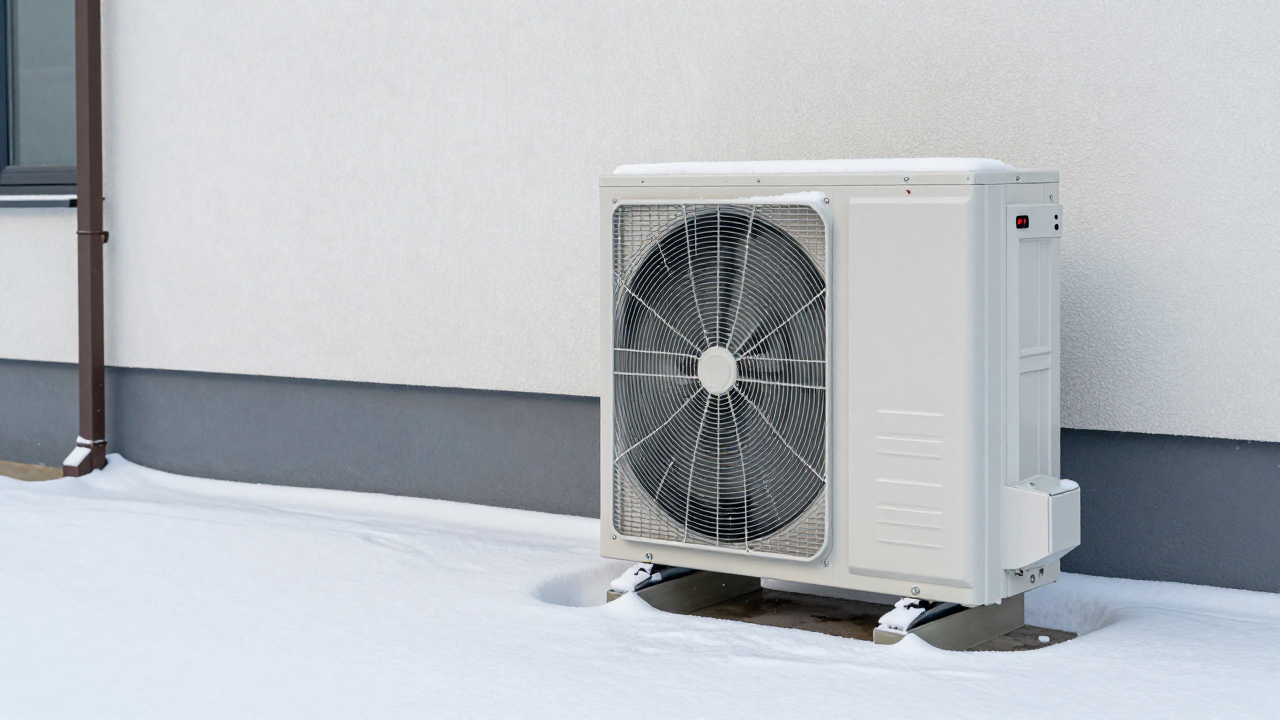
Do not clear snow, open cabinets, alter refrigerant lines, or perform electrical work based on a general article. Keep outdoor airflow unobstructed according to the manufacturer and call qualified service for ice accumulation, unusual noise, leaks, repeated faults, or loss of heat.
Reduce the heating load before buying more heat
Drafts often make people reach for portable heat even when the average room temperature looks adequate. ENERGY STAR recommends sealing common leaks and pairing air sealing with appropriate insulation, while the work still must preserve required ventilation and combustion safety (ENERGY STAR seal-and-insulate guidance). Do not seal combustion-air openings, dryer vents, bathroom exhausts, or unknown penetrations.
A professional or careful whole-home assessment can separate envelope leakage, insulation gaps, duct problems, control settings, and equipment faults. EPA’s indoor-environment guidance reinforces source control, ventilation, filtration, and moisture as connected parts of a healthy-house review, and our home energy audit checklist turns observations into an ordered action list.

Prioritize low-risk measures: close exterior doors, use intact weatherstripping where appropriate, keep supply and return paths unobstructed, clean only owner-serviceable filters as the manual directs, and address known duct or envelope leaks. Renters should obtain written permission before permanent changes.
A seven-day test instead of a guess
If the electrical system and heater setup pass every safety check, record seven comparable days:
- outdoor daily temperature or heating degree-day proxy;
- main-system set point and schedule;
- portable-heater rated watts and measured hours;
- whole-home kWh, not merely heater kWh;
- which doors were open or closed;
- comfort in occupied and vulnerable rooms;
- any defrost or auxiliary-heat indication;
- time-of-use period and marginal rate.
Compare similar-weather days. A plug-in energy meter may help only if it is specifically rated for the heater’s continuous load and the heater manufacturer permits it; adding an underrated meter or adapter creates another connection and is not required for this test. Rated watts multiplied by logged runtime provides a conservative estimate when a heater cycles.
Use this simple break-even screen for a permanent heat pump:
Simple payback years = net installed cost ÷ annual operating-cost reduction
If a hypothetical installed project costs $8,000 after confirmed incentives and saves $800 per year, simple payback is 10 years. This omits financing, maintenance, cooling value, equipment replacement timing, tariff changes, resale, and discounting. Verify current incentives rather than relying on expired summaries; the 2026 rebates and tax-credit guide explains the date and eligibility checks.
For a broader fuel-switch decision, use our heat pump versus gas heater guide, which includes emissions and fuel-price boundaries that are intentionally outside this electric-to-electric comparison.
Bottom line
Choose a portable electric heater only for a small, supervised, short-duration zone that passes the outlet, cord, clearance, occupancy, and freeze-risk checks. Choose a properly sized heat pump when heating demand is recurring, spans multiple rooms, or lasts many hours; its ability to move heat usually makes each delivered unit substantially less electricity-intensive.
Do not let a purchase-price comparison hide system boundaries. Calculate hours × kW × marginal rate, compare equal delivered heat, test total household kWh, and stop at any electrical or fire-safety warning. The greenest heating choice is the one that safely delivers the comfort actually needed while reducing the building load first.