Composting Bins for Small Spaces — EPA Data and Apartment-Friendly Options
Small-space composting: countertop bins, worm bins, bokashi, and tumblers tested. EPA food waste data, indoor odor management, and apartment-friendly setups.
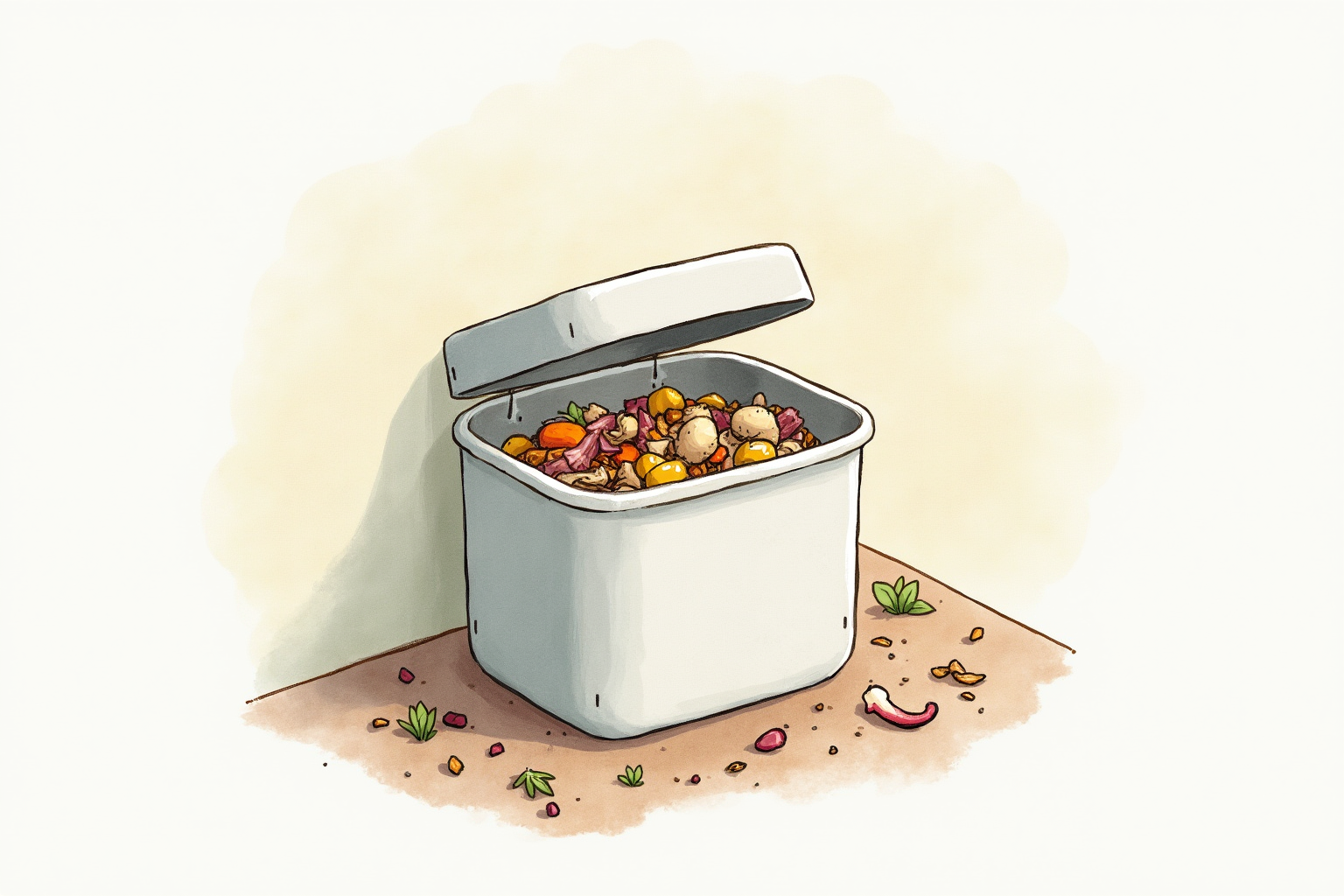
Composting diverts food waste from landfill where it generates methane (28x more potent than CO2 per IPCC data) and instead produces valuable soil amendment. Per EPA data, food waste makes up 24% of municipal solid waste in U.S. landfills — the largest single category. For apartment dwellers and small-yard households, the assumption that “composting requires a backyard” no longer holds; multiple proven small-space methods are available.
This article uses EPA composting guidance, USDA NRCS composting standards, Cornell Waste Management Institute research, and Wirecutter long-term reviews to compare composting options for small spaces. Topics include countertop collectors, worm bins, bokashi fermentation, indoor electric composters, and community drop-off programs.
For complementary content, see drought-tolerant plants data and eco-friendly pest control.
Why compost
Per EPA Sustainable Management of Food analysis, the annual environmental impact of household composting (vs landfilling) for an average 4-person U.S. household is significant: 300-400 lbs of food waste diverted from landfill, 0.3-0.5 metric tons of CO2-equivalent emissions avoided (methane prevention), 100-150 lbs of finished compost produced (worth $20-40 in retail soil amendment), and reduced municipal waste hauling costs.
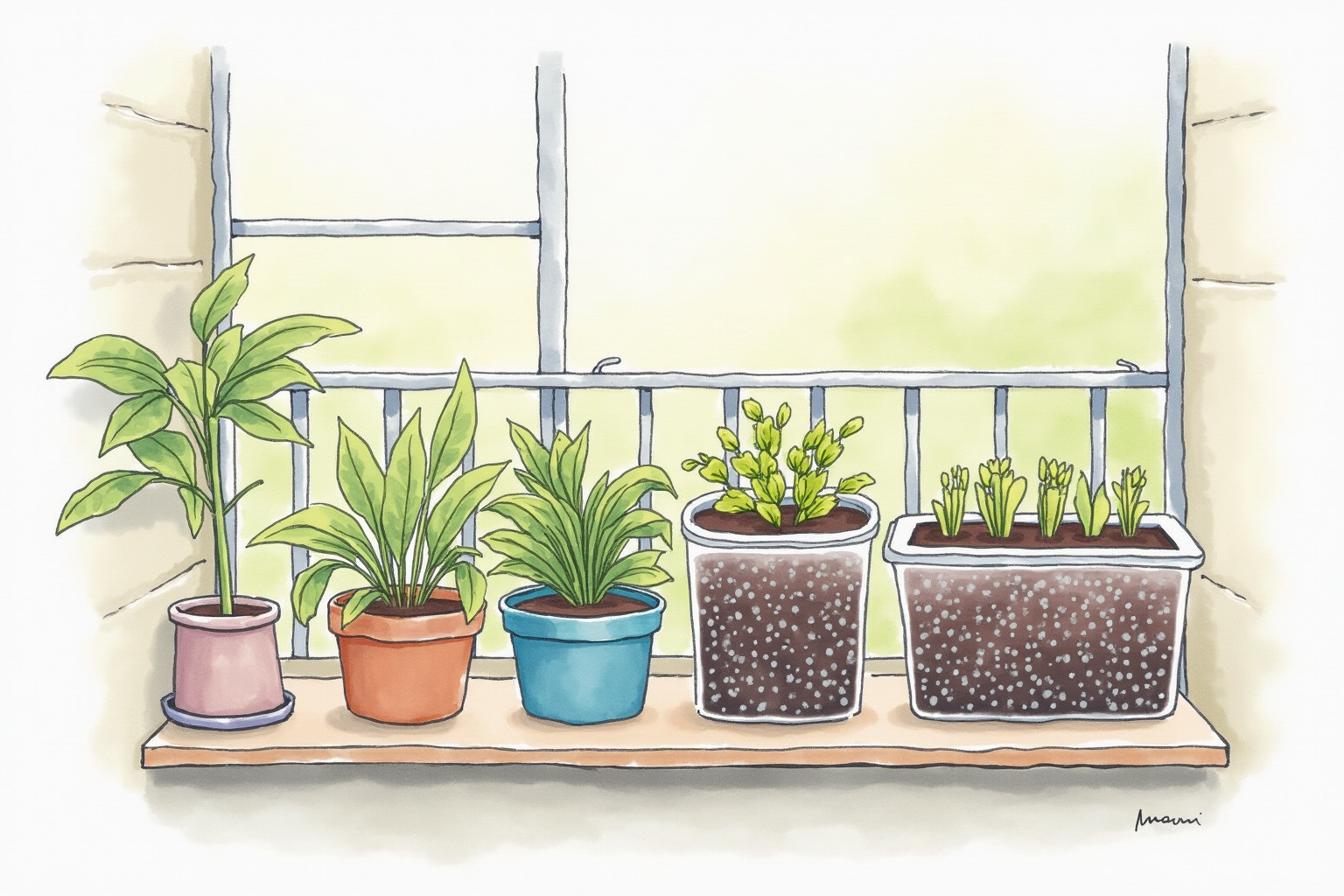
Beyond the environmental case, gardening households benefit directly from free, high-quality soil amendment. Per Cornell soil science research, compost adds nutrients, improves soil structure, helps water retention in sandy soils and drainage in clay soils, and supports beneficial microbial activity.
Countertop collectors
The starting point. A countertop collector holds 1-3 days of kitchen scraps before transferring to outdoor bin, worm bin, bokashi, or community drop-off.
OXO Good Grips Easy-Clean Compost Bin — 1.75 Gallon
Price · $25-35
+ Pros
- · Removable inner bin for easy emptying
- · Charcoal filter reduces odor
- · Smooth interior — easy cleaning
- · Holds 3-4 days for typical kitchen
− Cons
- · Filter replacement every 3-6 months
- · 1.75 gal small for big households
- · Not airtight — needs frequent emptying
Paid affiliate link. Price, availability, and ratings can change; verify details on the retailer page before buying.
Per Wirecutter testing, the OXO Good Grips is the consistent winner across multiple review cycles. The removable inner bin makes emptying simple, the charcoal filter handles typical odor, and the size fits most households without dominating counter space.
Compostable bin liners
Optional but recommended. Compostable bags (PLA-based, BPI-certified) line the inner bin and contain scraps for clean transfer. Avoid “biodegradable” plastic bags without compostability certification — most don’t break down in home compost systems. BPI certification confirms commercial composting compatibility.
Worm bins (vermicomposting)
Apartment-friendly indoor composting using red wiggler worms. Worm bins handle 1-2 lbs of food waste per week per square foot of bin surface, produce nutrient-dense worm castings and “worm tea” liquid fertilizer, and operate odorlessly when balanced.
Worm Factory 360 4-Tray Composting System
Price · $120-150
+ Pros
- · Stackable tray system — easy harvest
- · Indoor or outdoor placement
- · Odorless when balanced
- · Produces premium worm castings
− Cons
- · Initial setup needs 0.5-1 lb red wigglers
- · Temperature sensitive (50-80°F ideal)
- · Learning curve — moisture and food balance
Paid affiliate link. Price, availability, and ratings can change; verify details on the retailer page before buying.
The Worm Factory 360 is the established mainstream choice. Stackable trays let worms migrate upward as you add food, leaving finished castings in lower trays. The system handles a typical 2-person household’s vegetable scraps and produces 2-5 gallons of castings annually.
Worm bin tips
Red wigglers (Eisenia fetida) are the right species — earthworms from your yard won’t work. Feed 2-3 times per week, not daily. Bury food under bedding to deter fruit flies. Maintain moisture like a wrung-out sponge. Keep temperatures 50-80°F (avoid hot garages or freezing balconies).
Bokashi (anaerobic fermentation)

Sealed-bucket fermentation using lactobacillus inoculant. Bokashi accepts foods other systems cannot — meat, dairy, citrus, cooked food — and produces a pre-compost product ready for soil burial.
Bokashi Composting Starter Kit — 2 Buckets + Bran
Price · $80-120
+ Pros
- · Accepts meat, dairy, oils, citrus
- · Completely odor-free (sealed)
- · Fast cycle (4-6 weeks total)
- · Compact indoor footprint
− Cons
- · Bran inoculant required ongoing ($10-20/month)
- · Final product needs soil burial step
- · Slight pickled-fermentation smell when opened
Paid affiliate link. Price, availability, and ratings can change; verify details on the retailer page before buying.
Bokashi works by anaerobic fermentation rather than aerobic decomposition. Add food scraps, sprinkle bokashi bran inoculant (wheat bran + EM microbes), compress and seal. Tap liquid every 2-3 days (this concentrated bokashi tea dilutes 1:100 for plant fertilizer). Once bucket is full, seal and ferment 2 weeks, then bury contents in garden soil or compost bin where final breakdown completes in 2-4 weeks.
Best for apartments and households cooking meat/dairy. Worst for households with no soil access (the final burial step still requires somewhere to bury fermented material).
Outdoor tumblers and bins
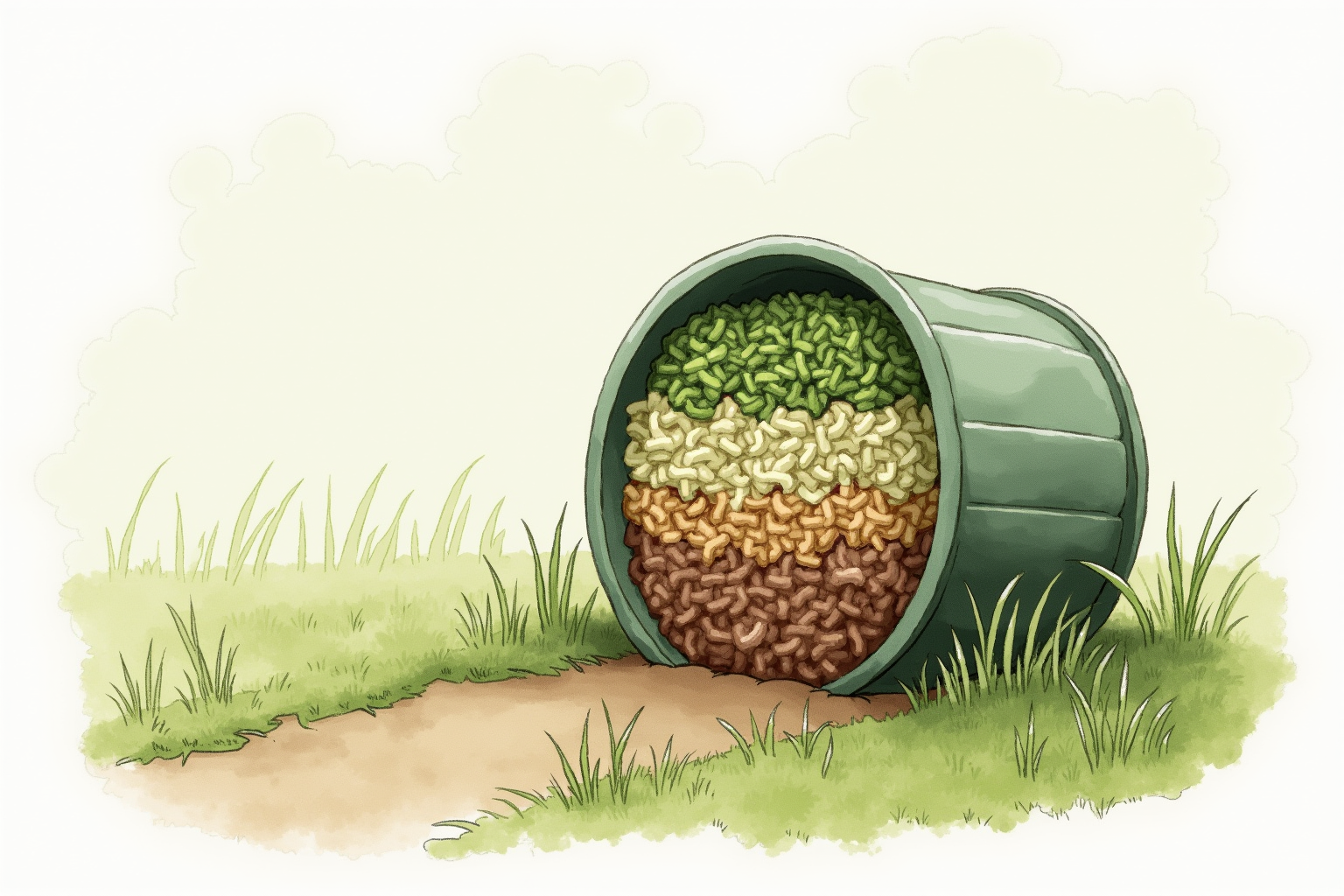
Standard backyard composting. Tumblers ($80-200) speed decomposition through frequent turning. Stationary bins ($30-100) require manual turning with pitchfork but lower cost.
For households with even modest outdoor space (10 sq ft), a 40-100 gallon tumbler is the highest-throughput option. Add browns (dried leaves, cardboard, newspaper) and greens (kitchen scraps, fresh yard waste) in roughly 30:1 ratio. Turn 2-3 times per week. Harvest finished compost in 6-12 weeks.
Electric composters
The recent entrant. Lomi, Vitamix FoodCycler, and Mill Kitchen Bin grind and dehydrate kitchen scraps in 4-24 hour cycles. Output is dried, ground food (not true compost) that decomposes faster when added to soil.
The use case is apartment dwellers without bokashi/worm-bin space who want kitchen waste diverted from trash. Price is high ($300-500), energy use is moderate (0.4-1.0 kWh per cycle), and the output requires further composting or soil mixing to truly decompose.
Per Wirecutter testing, electric composters work as advertised for waste reduction but aren’t replacements for traditional composting. They’re a convenience product for specific apartment situations.
Community composting
Often overlooked. Many municipalities run curbside compost collection (San Francisco, Seattle, Portland, Toronto, NYC starting 2024) or drop-off centers (farmers markets, community gardens). Per Institute for Local Self-Reliance data, community composting is growing 10-15% annually across U.S. cities.
For apartment dwellers without indoor compost capacity or interest, freezing scraps until weekly farmers market drop-off is a workable alternative. Many cities also have private compost pickup services ($15-40/month) that collect from apartment doorsteps.
Total cost and time comparison
Per Cornell and EPA composting data, the typical setup cost ranges from $25 for basic countertop collector + community drop-off to $400-500 for electric composter. Worm bin and bokashi systems run $80-150.
Annual operating cost is near-zero for traditional methods (bokashi bran $100-200/year is the exception). Time investment ranges from 5 minutes/week (electric, drop-off) to 30 minutes/week (active tumbler turning).
For most apartment households, a $30 countertop collector plus a $80 worm bin OR $80 bokashi setup is the right starter combination. Total cost $110, ongoing cost $0-200/year, time commitment 10-15 minutes/week.
Common pitfalls
Per EPA composting guide and Cornell field data, the most common failures are too wet (anaerobic conditions, bad smell) — add more browns and turn more often; too dry (slow decomposition) — add water like a wrung-out sponge moisture; fruit flies in indoor systems — bury food under cover layer immediately and clean bin daily; cold weather slowdown — outdoor systems pause at sub-40°F, indoor systems unaffected.
For worm bins specifically: avoid citrus, onions, and garlic in large quantities (worms dislike pH extremes), keep moisture controlled (excess water drowns worms), maintain temperature (worms die below 40°F or above 90°F).
Bottom line
Apartment composting is genuinely feasible. The OXO Good Grips countertop collector plus a Worm Factory 360 worm bin handles 90% of small-household kitchen waste indoors with no odor or pests when properly set up. Bokashi extends this to households cooking meat and dairy regularly. Electric composters are convenient but expensive and not true composting.
For yard-having households, traditional outdoor tumblers or 3-bin systems remain the highest-throughput, lowest-cost option. Community composting fills the gap for apartment dwellers without indoor space or interest.
For complementary reading, see drought-tolerant plants data, eco-friendly pest control, and the composting category.