Shade Trees for Home Cooling: Placement, Savings, and Safety Plan
A practical shade-tree plan for orientation, mature size, utility clearance, planting, watering, pruning, and realistic home-cooling savings.
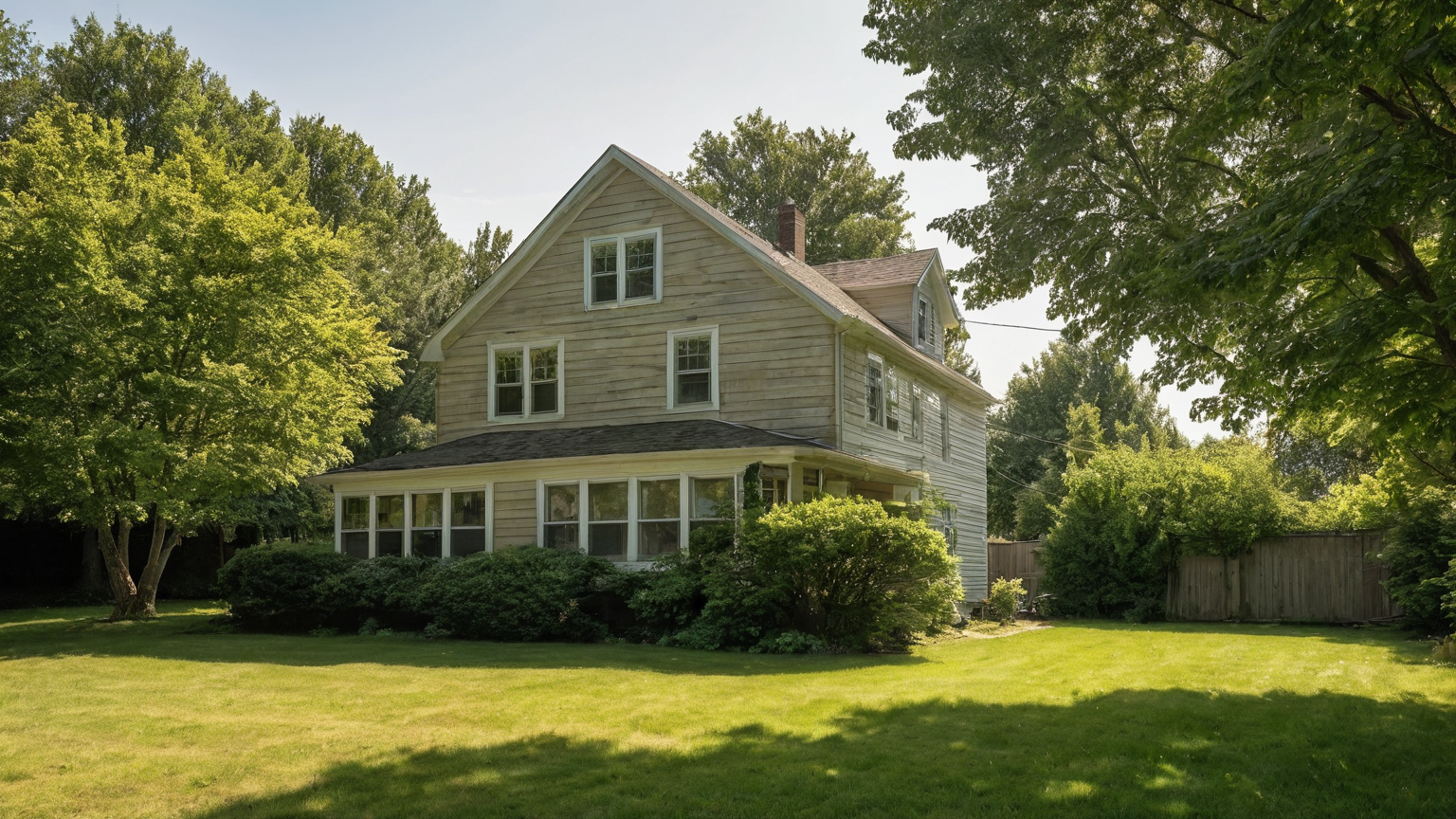
A shade tree is not an instant air-conditioner and not a generic “green” purchase. Its value depends on where the summer sun hits, how large the canopy becomes, whether roots and branches fit the site, and whether the tree survives long enough to provide useful shade. A sapling planted in the wrong place can create roof, foundation, utility, sidewalk, or maintenance problems before it produces meaningful cooling.
EPA describes trees and vegetation as heat-island strategies that cool through shade and evapotranspiration (EPA). Deciduous-canopy scenarios can also be explored with the USDA Forest Service’s location- and species-aware i-Tree Design tool. Neither source promises the same bill reduction for every house.
Right-tree rule: plan from mature dimensions and the house’s solar exposure, not from the sapling’s price, current height, or a dramatic before-and-after percentage.
Map the heat problem before choosing a tree
On a clear warm day, observe the house at 9 a.m., noon, 3 p.m., and 6 p.m. Mark which windows, walls, roof sections, patios, and outdoor equipment receive direct sun. West-facing glass often receives intense low-angle afternoon sun when cooling demand is high. East windows receive morning sun. South exposure changes with season and latitude; north sides may need wind, moisture, or daylight solutions more than shade.
Use an inexpensive indoor thermometer only as a trend tool: compare similar rooms at similar times. Blinds, occupancy, appliances, air leaks, insulation, and HVAC balancing can all explain room differences. A tree should address a verified solar-exposure problem, not conceal an unresolved duct, moisture, or insulation problem. Start with the home energy audit checklist.
Choose the target: glass, wall, roof, or outdoor comfort
Shade on west glass can be valuable because windows admit solar energy directly. Shade on an already well-insulated wall may produce a smaller indoor effect. A canopy over a patio can improve outdoor comfort without materially changing whole-house electricity. Define the target so success can be measured honestly.
Use sun observations and i-Tree’s placement scenarios as a planning framework, then adapt the result to local climate, site constraints, species availability, and professional utility-clearance advice.
Work backward from mature size
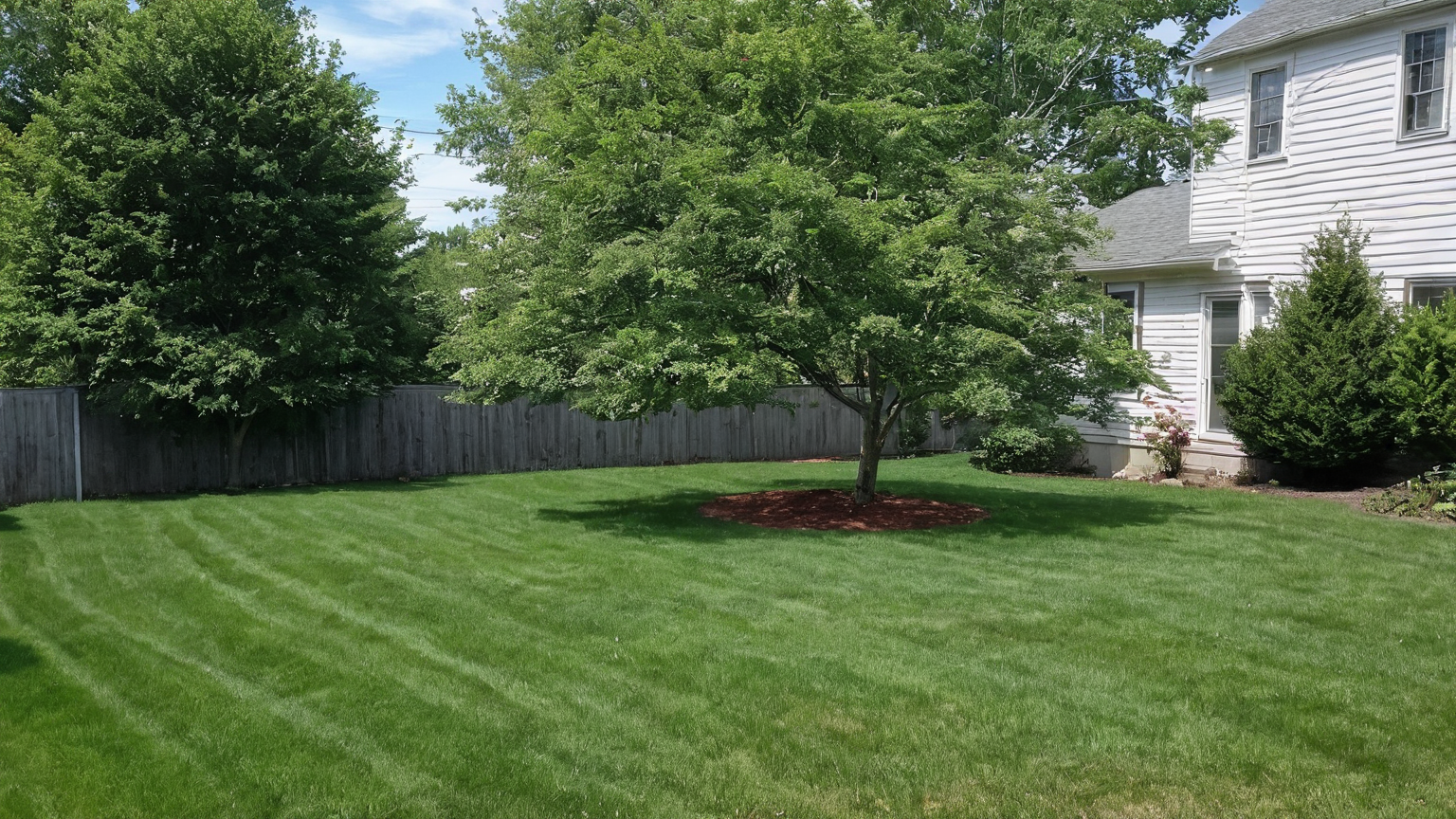
Nursery tags show a range, not a guarantee. Research mature height, crown spread, root behavior, growth rate, drought and flood tolerance, soil preference, storm resistance, pest pressure, litter, fruit, thorns, allergens, and invasiveness. Confirm the correct USDA hardiness zone at the official Plant Hardiness Zone Map, but remember that a zone describes extreme minimum temperature—not summer heat, soil drainage, water availability, or urban reflected heat.
Draw the mature crown as a circle on a site plan. Include:
- house, garage, roof edges, and windows;
- overhead and underground utilities;
- sidewalks, driveway, curb, septic, drains, and retaining walls;
- neighboring property and sight lines;
- prevailing wind and snow/drainage paths;
- enough space for safe pruning and future work.
The International Society of Arboriculture’s trees-and-utilities guidance explains why species and placement must fit overhead and underground infrastructure. Contact the local utility-location service before digging; a nursery recommendation does not locate buried lines.
A placement decision table
| Site condition | Better planning direction | Avoid |
|---|---|---|
| Hot west windows with open yard | Deciduous canopy placed to shade mature afternoon sun | Planting from current sapling height only |
| Overhead distribution lines | Small-maturing species approved for the clearance zone, or a different location | Large shade tree directly beneath wires |
| Narrow strip by driveway/sidewalk | Compact species with appropriate roots and crown | Large trunk/root system in a confined pit |
| Fire-prone landscape | Follow local defensible-space and species guidance | Dense canopy or flammable debris against structures |
| Hurricane/ice/wind exposure | Locally proven structure, professional pruning, adequate rooting space | Fast growth as the only criterion |
| Dry climate or watering limits | Climate-adapted species and establishment-water plan | High-water species with no irrigation budget |
| Rental property | Landlord/utility approval and reversible shade first | Permanent planting without permission |
“Native” can be a strong ecological criterion, but a native species can still be too large, poorly suited to compacted soil, or wrong beneath lines. “Drought tolerant” still usually requires establishment watering.
Estimate savings without inventing precision
Cooling savings depend on climate, shade geometry, house efficiency, air-conditioning performance, thermostat behavior, and electricity rates. A transparent hypothetical estimate is more honest than a universal percentage.
Assume a household uses 1,200 kWh for cooling in a summer and pays $0.18/kWh. Cooling cost is:
1,200 × $0.18 = $216.
If a modeling tool estimates that mature shade could reduce that cooling energy by 5% for this particular geometry, the hypothetical annual value is:
1,200 × 0.05 = 60 kWh; 60 × $0.18 = $10.80.
At 12%, it would be 144 kWh and $25.92. These are scenarios, not promises. A young tree may provide little building shade for years. Electricity rates and weather change. Pruning, watering, removal, storm damage, and replacement also have costs.
USDA Forest Service’s i-Tree Design can estimate benefits using location, species, size, and placement. Treat model output as scenario evidence, not a utility-bill guarantee. Peer-reviewed studies have modeled energy effects of urban shade trees but also depend on assumptions and local building/vegetation data (Simpson and McPherson, 2001; Maco and McPherson, 2004).
Compare tree shade with faster measures
A tree is a long-horizon measure. Exterior shade, cellular shades, air sealing, attic insulation, duct repair, and HVAC maintenance may change comfort sooner. Compare by target and timeline:
| Measure | Time to benefit | Main strength | Main limitation |
|---|---|---|---|
| Deciduous shade tree | Years to meaningful canopy | Multiple ecological and comfort benefits | Survival, growth, placement, maintenance |
| Exterior awning/shutter | Immediate after installation | Blocks sun before it reaches glass | Cost, wind loads, design/permit issues |
| Interior shade | Immediate | Low-cost and reversible | Heat has already crossed the glass |
| Air sealing/insulation | Immediate after correct work | Broad comfort and load reduction | Requires diagnosis and moisture/ventilation care |
| HVAC service | Immediate if a defect exists | Restores performance | Does not reduce solar gain by itself |
Use the window-shade schedule while waiting for a tree to mature. The best plan may combine a tree with a near-term envelope fix.
Select the tree with local evidence
Build a three-candidate shortlist from a local extension service, municipal forester, utility tree program, or qualified arborist. For each candidate, record mature spread, mature height, expected form, water needs after establishment, soil tolerance, pest risks, invasiveness status, and clearance compatibility.
The Arbor Day Foundation’s Right Tree, Right Place framework is useful, but local professionals should resolve local constraints. Avoid unsupported claims such as “roots never harm foundations” or “this species is storm-proof.” Roots follow favorable soil and moisture conditions; buildings, pipes, and pavement vary.
Planting depth and mulch are safety issues
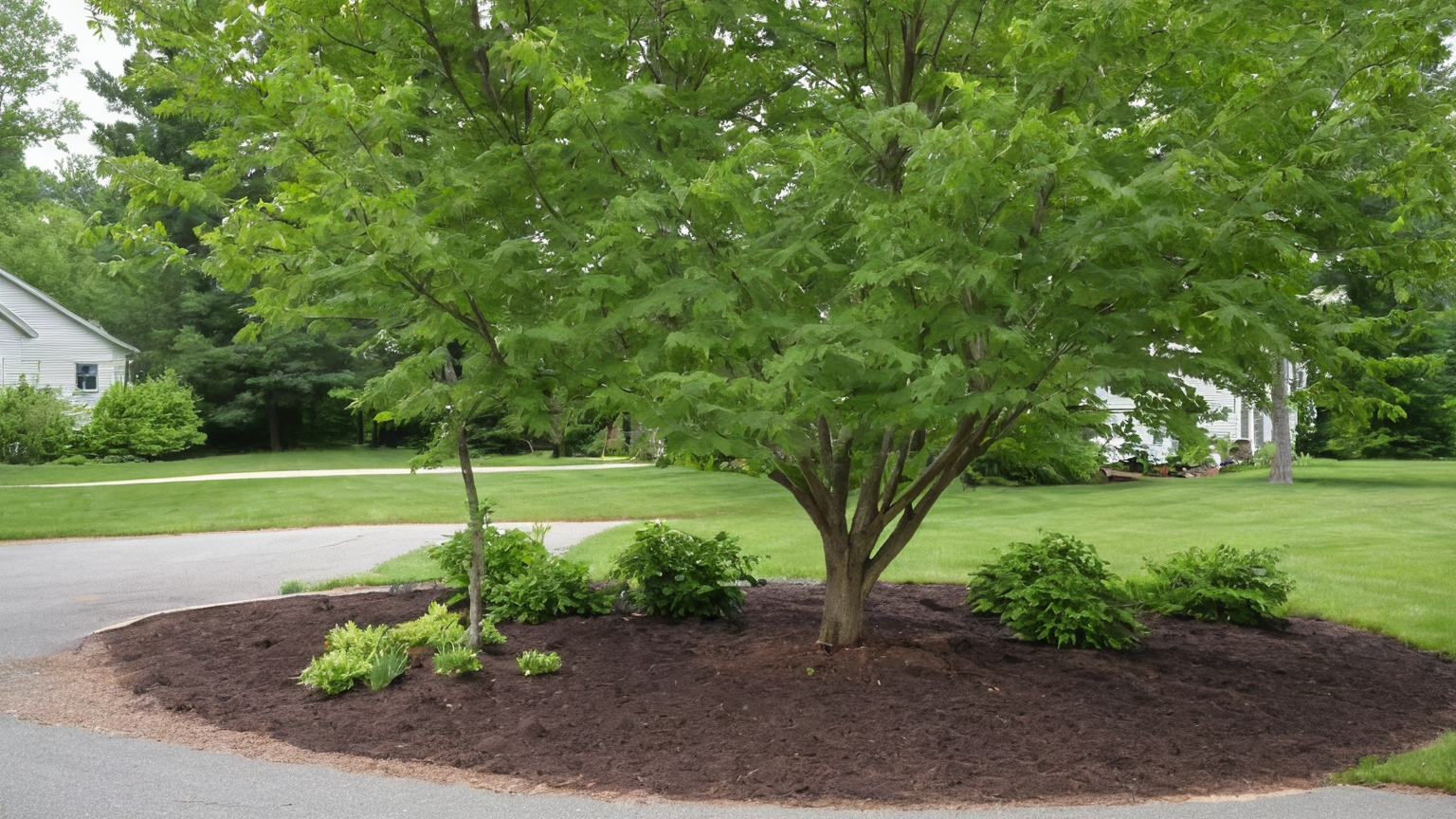
The root flare—the widening where trunk meets roots—should be visible at the finished grade. A hole should generally be broad rather than excessively deep, and backfill should use site soil unless local guidance says otherwise. University of Minnesota Extension’s tree planting guide provides a detailed process for root inspection, hole preparation, depth, backfill, watering, and staking.
Do not pile mulch against the trunk. Use a broad, moderate layer with a gap around bark. “Volcano mulch” holds moisture against the trunk and can hide defects. Stake only when needed and remove supports on the recommended schedule; tight permanent ties can damage the trunk.
Water for establishment, then reassess
Newly planted trees need a watering plan based on root ball, soil, weather, drainage, and species. A fixed weekly gallon number can overwater clay or underwater sand. Check moisture below the surface and follow local extension guidance. Keep irrigation away from walls and foundations when drainage is uncertain.
Calculate an annual water budget before buying. If establishment requires a hypothetical 15 gallons per week for 26 weeks, that is:
15 × 26 = 390 gallons.
This is not a prescription; it reveals whether the household can support establishment through drought restrictions or travel. A dead tree provides no shade and wastes nursery, transport, planting, and water inputs.
Prune for structure, not size panic
Inspect young trees annually for crossing branches, weak attachments, included bark, damage, and clearance. Structural pruning is usually easier when branches are small. Do not top a tree. Topping removes large portions of canopy, creates wounds, and often stimulates weakly attached regrowth. Hire a qualified arborist for work near utilities, large limbs, climbing, chainsaws, or storm damage.
Keep the canopy away from roofs and chimneys according to local fire and building guidance. Do not plant to intentionally block solar panels or necessary winter daylight. A tree can solve one energy problem while creating another if the full site is ignored.
Measure outcomes at three horizons
Year 0–1: survival, root flare, moisture, mulch gap, staking, and no utility conflict.
Year 2–5: canopy growth toward the target, structural pruning, room-temperature trends, and changes to irrigation needs.
Maturity: actual shade hours, cooling kWh normalized for weather where possible, roof/window clearance, health, storm risk, and maintenance cost.
Compare electricity using cooling degree days or similar weather context rather than comparing one mild summer with one extreme summer. If exact analysis is not practical, track the target room at consistent times and note shade coverage.
Go/no-go checklist
Proceed only when:
- the solar target is documented;
- mature height and spread fit the site;
- overhead and underground utilities are located;
- species fits hardiness, heat, soil, drainage, and water availability;
- local invasive-species and fire guidance are checked;
- landlord, HOA, municipal, and permit requirements are satisfied;
- establishment watering and maintenance are affordable;
- the planting hole, root flare, mulch, and staking plan are correct;
- a professional will handle high-risk pruning or utility proximity.
Hold or choose a different measure when the only planting spot is beneath lines, against the foundation, inside a narrow pavement cutout, or dependent on constant irrigation the household cannot provide. Shade trees can improve comfort and reduce heat exposure, but their best energy feature is not a dramatic percentage. It is a correctly placed living canopy that remains healthy, safe, and useful for decades.