Silicone Food Storage Tested — Stasher, Stretch Lids, and Freezer Bags (FDA Data)
Silicone food storage bags, stretch lids, and freezer-safe containers tested for safety, durability, and dishwasher cycles. FDA food-grade data and long-term reviews.
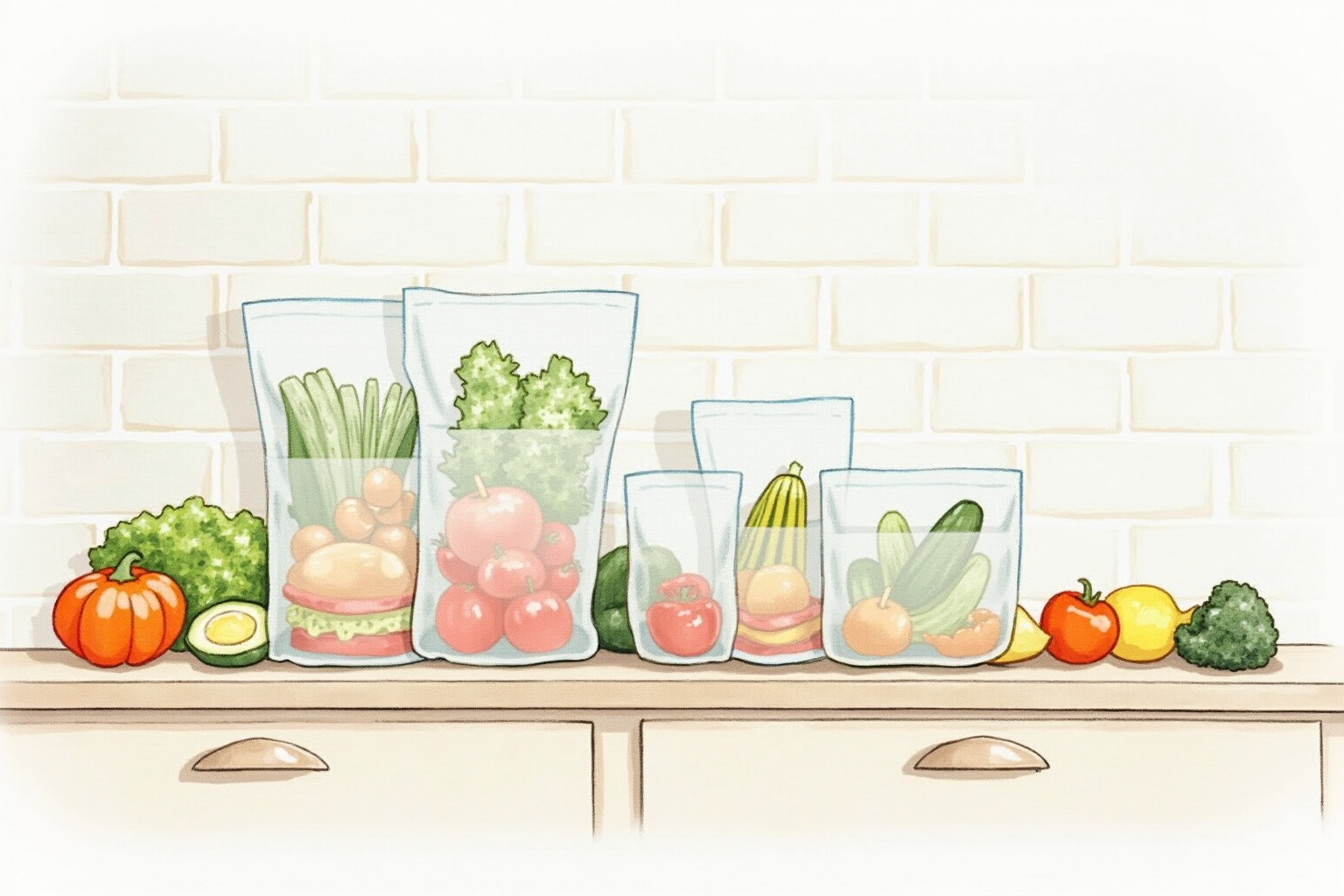
Single-use plastic bags (Ziploc, Glad, store brands) are one of the largest single-use plastic streams in U.S. households. Per EPA waste data, Americans use approximately 110 billion plastic food storage bags per year — most going to landfill since film plastics are difficult to recycle through municipal programs. Food-grade silicone bags, stretch lids, and reusable freezer bags have emerged as the primary direct replacement.
This article uses FDA food contact substance regulations, Consumer Reports testing, Wirecutter long-term reviews, and Cook’s Illustrated cooking tests to evaluate silicone food storage options. The categories covered are zip-style silicone bags (Stasher, Zip Top, S’well), silicone stretch lids, silicone freezer bags, and dishwasher/oven safety.
For complementary content, see reusable water bottles compared and cloth vs paper towel data.
What food-grade silicone actually is

Per FDA Food Contact Substance Notifications, food-grade silicone is a synthetic polymer (polydimethylsiloxane) cured with platinum catalyst. The platinum-cured process produces fully inert silicone that does not leach chemicals into food at normal use temperatures (-40°F to 450°F per typical food-grade specs).
Two important distinctions: platinum-cured (food-grade) is safe and inert, while peroxide-cured silicone may contain residual peroxide and is not approved for food contact. Always look for “food-grade” or “platinum-cured” specifications on silicone food storage. Major brands (Stasher, Zip Top, Le Creuset) all use platinum-cured food-grade silicone.
Temperature range
Food-grade silicone’s temperature range is remarkable: it handles freezer (-40°F), refrigerator (35°F), room temp (70°F), dishwasher (180°F), microwave (212°F+), boiling water (212°F), oven baking (400-450°F), and direct flame contact at low duration. This single-material flexibility is the core advantage over plastic bags (~120°F max) and even glass (no direct freezer-to-oven transitions).
Zip-style silicone bags

The flagship category. Stasher pioneered the modern reusable silicone bag in 2016, and the category has expanded with Zip Top, S’well, and others. Per Wirecutter long-term testing, Stasher bags maintain seal integrity over 1,000+ uses with proper care.
Stasher Reusable Silicone Bag — 4 Pack Variety
Price · $45-55
+ Pros
- · Platinum-cured silicone — FDA compliant
- · Freezer / microwave / dishwasher / sous vide safe
- · Self-sealing pinch zip — leak-proof
- · Lifetime warranty against defects
− Cons
- · Premium price vs unbranded silicone
- · Stains with tomato sauce and curry
Paid affiliate link. Price, availability, and ratings can change; verify details on the retailer page before buying.
The zip-style bags excel for meal prep portions, sandwiches and lunch packing, freezer storage of berries and vegetables, sous vide cooking, and ingredient storage (nuts, snacks, spices). The 4-pack variety with different sizes (sandwich, snack, half-gallon, stand-up) covers most household needs.
Workflow
Best practices for silicone bag longevity: hand-wash with dish soap and dry inside-out, or dishwasher top rack with bag opened wide; avoid sharp items inside (poking through silicone); for stubborn stains, baking soda paste or 30-min sun exposure; keep flat or hanging when storing to maintain shape.
Silicone stretch lids
The dish-cover replacement. Silicone stretch lids fit over bowls, plates, half-cut fruits, and food containers in a wide range of sizes. Per Consumer Reports, they replace 70-90% of single-use plastic wrap consumption for typical household refrigerator use.
Silicone Stretch Lids — 12 Pack
Price · $15-20
+ Pros
- · 6 sizes — fits bowls 1.5" to 9" diameter
- · Food-grade silicone — dishwasher safe
- · Microwave / freezer compatible
- · Snap-on suction fit
− Cons
- · Not airtight — short-term use only
- · Loose fit on irregular shapes
- · Single-color makes size sorting harder
Paid affiliate link. Price, availability, and ratings can change; verify details on the retailer page before buying.
Stretch lids work best for refrigerator covers (leftovers in original bowl), half-cut produce (avocado, melon, citrus), serving bowls being saved overnight, and tall containers without matching lids. They don’t replace airtight storage — for long-term storage or freezing, use sealed containers or silicone zip bags.
Silicone freezer bags
Sub-category for freezer-specific use. Most quality silicone bags (Stasher, Zip Top) work fine for freezer use, but dedicated freezer-thick silicone bags (W&P, Porter Green) add insulation and seal robustness for long-term frozen storage.
For freezer use, key considerations are flat-pack capability (silicone bags stack flat efficiently vs rigid containers), label space (white silicone areas or attached paper labels for date/contents tracking), thaw flexibility (thaw bag in fridge, then microwave directly), and seal reliability across freeze-thaw cycles.
Comparison vs alternatives
The major competitor reusable categories are glass containers (Pyrex, Anchor Hocking, OXO), stainless steel containers (LunchBots, ECOlunchbox), and beeswax wraps (Bee’s Wrap, Abeego). Each has specific strengths.
Glass wins on transparency (see contents), durability (1000s of uses), oven safety, and chemical inertness. Loses on weight, breakability, and freezer space efficiency. Stainless wins on durability, leak-proof seal (with silicone gasket lids), and indoor air safety. Loses on microwave compatibility, freezer flat-pack, and price. Beeswax wraps win on biodegradability, breathable storage (good for cheese, bread), and natural materials. Loses on temperature range (no freezer, no hot food), wash limitations, and replacement frequency.
Silicone occupies a unique role: flexible, microwavable, freezable, dishwasher safe, lightweight, and reasonably priced. It’s the most versatile single-material option.
Real-world cost analysis
Per EPA data and household surveys, a typical U.S. household uses about 50 boxes of zip plastic bags per year (~$300 annual cost). The full silicone replacement set costs $80-120 upfront (4-5 bag sizes plus stretch lids), lasts 5+ years, and requires only the silicone itself plus occasional baking soda for stain treatment.
5-year cost comparison: Plastic bags $1,500 vs Silicone setup $120. Net savings: $1,380. Annual plastic waste avoided: ~50 boxes worth = ~600 individual bags. Carbon footprint of plastic bag production is significant — silicone’s higher embodied energy pays back environmentally within ~30-50 uses.
Common failure modes
Per long-term user reports and Wirecutter follow-up testing, the most common silicone bag failures are seal cracking (3-5 years of regular use, usually from repeated stretch), permanent staining (tomato, curry, beet — cosmetic only, doesn’t affect function), tear from sharp objects (avoid bones, crackers with sharp edges), and odor retention from strong spices (washing with baking soda usually resolves).
Quality silicone bags from Stasher, Zip Top, and S’well typically include lifetime defect warranty. Honor this — manufacturers replace defective bags promptly, which significantly improves value math.
Practical starter setup
For a household transitioning from plastic bags, a workable starter kit includes 4-5 Stasher bags in varied sizes for ~$45, a 6-12 piece silicone stretch lid set for ~$15, and 4 medium glass containers with silicone-gasket lids for ~$25. Total: ~$85 upfront.
This replaces about 80% of disposable plastic bag and wrap use. Keep one box of zip plastic bags for genuine specialty needs (raw meat marinade, paint storage, things you’d rather not wash). Adding more silicone bags as needed for specific use cases (lunch packing, freezer batch cooking).
Bottom line
For most households, food-grade silicone bags (Stasher or equivalent platinum-cured options) are the right primary replacement for single-use plastic zip bags. The temperature versatility (freezer through oven), seal reliability, and dishwasher convenience matches plastic bag workflow with zero compromise on safety. The 5-year payback is overwhelming, both environmentally and financially.
Silicone stretch lids handle the second largest category (plastic wrap and dish covers) at low cost. Glass containers fill out the system for long-term and oven applications. Beeswax wraps add specialty utility for breathable food storage.
For complementary reading, see reusable water bottles compared, cloth vs paper towel data, and the reusable living category.